
Kucing Sebagai Motif Hias Batik Pada Kemeja Pria
DOI:
https://doi.org/10.21009/qualia.31.05Keywords:
Cats, Motifs, Written Batik, Men's Shirts, TextilesAbstract
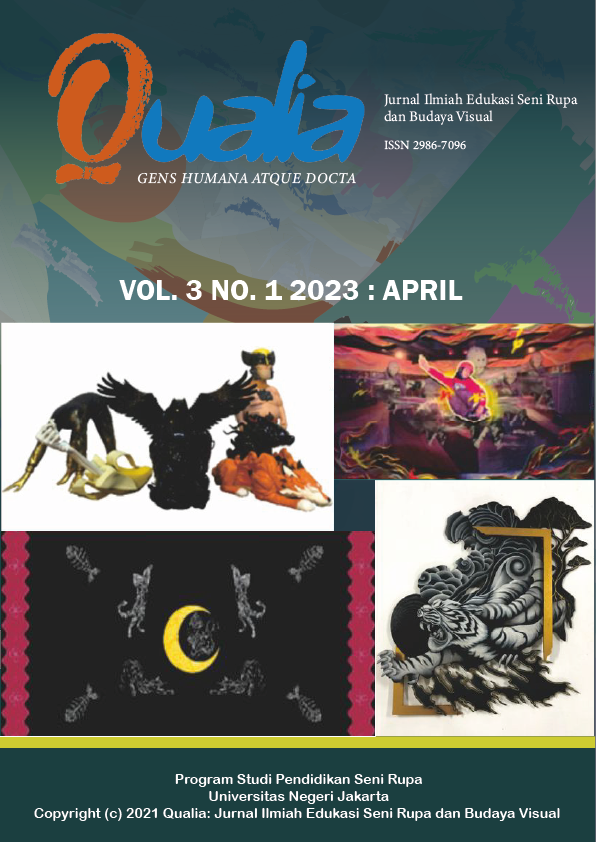
Cats are friendly animals, they are sensitive to their surroundings, and sometimes their behavior attracts attention. This behavior became a source of inspiration in designing shirts with fabric made using the batik technique. The design method uses practice-based research. The shirt that will be made this time is a men's shirt with short sleeves, without pockets, and a variety of buttons covered by fabric. There are 3 steps in making a work, namely exploring motifs, designing the work, and evaluating the results. The results of the motif exploration obtained 4 motifs, namely the cat motif as the main motif and the fish bone motif as a complementary motif. From the work that has been created, there are several shortcomings caused by problems that occur, such as the color bleeding out of the lines due to the wax breaking on the surface of the fabric. Therefore, the process of applying wax on fabric needs to be carefully considered to ensure it can block the color effectively.
References
Al Hazmi, F., & Oetopo, A. (2022). Utilization Of Rhizophora Stylosa Bark For Natural Dyeing On Cotton Batik Fabric. Corak: Jurnal Seni Kriya, 11(1), 55-56.
Anjani, R. I., & Patria, A. S. (2019). Perancangan Buku Ilustrasi Edukasi Panduan Memelihara Kucing untuk Anak Usia 10-12 Tahun. Jurnal Seni Rupa, 1(12), 91-98.
Dewi, R. (2018). Kemeja dan Celana Pria. Syiah Kuala University Press.
Lisbijanto, Herry. (2013). Batik. Yogyakarta: Graha Ilmu.
Setianingrum, F. (2012). Manfaat memelihara hewan pada penderita penyakit kronis (Doctoral dissertation, University of Muhammadiyah Malang).
Downloads
Published
How to Cite
Issue
Section
License
Copyright (c) 2023 Septi Rahmawati

This work is licensed under a Creative Commons Attribution 4.0 International License.

.png)