MAIN MENU
| Focus and Scope |
| Editorial Board |
| Reviewer |
| Journal History |
| Contact Us |

SASKARA: Indonesian Journal of Society Studies is committed to ensuring the long-term accessibility and preservation of its valuable scholarly content. In this pursuit, we leverage the robust capabilities of the LOCKSS (Lots of Copies Keeps Stuff Safe) system.
Digital Archiving Policy
SASKARA: Indonesian Journal of Society Studies has electronic backup and preservation of access to the content of its journals via PKP Preservation Network (PKP PN). This can be seen at Publisher Manifest.
PKP has developed the PKP Preservation Network (PKP PN) to digitally preserve OJS journals. The LOCKSS program offers decentralized and distributed preservation, seamless perpetual access, and preservation of the authentic original version of the content. The PKP PN ensures that journals that are not part of any other digital preservation service (such as CLOCKSS or Portico) can be preserved for long-term access. For additional details about the PKP PN, Please kindly see the high-level overview (an early discussion document).
This journal uses Open Journal Systems, which is open source journal management and publishing software developed, supported, and freely distributed by the Public Knowledge Project under the GNU General Public License.
What is LOCKSS?
LOCKSS is an innovative open-source system designed for distributed digital archiving. This collaborative network empowers participating libraries to not only access SASKARA's published research, but also to actively contribute to its preservation.
How Does LOCKSS Work?
Imagine a vast network of libraries, each holding a digital copy of SASKARA's content. The LOCKSS system facilitates this by:
Benefits of the LOCKSS System
SASKARA's adoption of the LOCKSS system offers several significant advantages:
By embracing the LOCKSS system, SASKARA demonstrates its unwavering commitment to the long-term preservation of scholarly knowledge. We believe that the valuable research published in our journal deserves to be accessible not only for the present generation but also for future scholars and the public. The LOCKSS system serves as a cornerstone of this commitment, ensuring that SASKARA's contributions to the field of Indonesian social studies will continue to inform and inspire for years to come.
Our Tools:


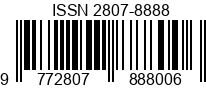
Electronic International Standard Serial Number (E-ISSN)
In Cooperation With:
6.png)
.png)
1.png)
.png
)
Editorial Office:
Laboratorium Sosiologi, Gedung K, Fakultas Ilmu Sosial dan Hukum, Lantai 4
Jl. Rawamangun Muka, RT.11/RW.14, Rawamangun, Pulo Gadung, Jakarta.
Saskara: Indonesian Journal of Society Studies
Operated by Laboratorium Sosiologi, Universitas Negeri Jakarta
Licensed under CC BY-NC 4.0


