Creation and Evaluation of a Polyurethane/Carbon/Zinc Oxide Film Composite for Use as a Coating Material
DOI:
https://doi.org/10.21009/JKEM.10.2.9Keywords:
dielectric, thermal resistance, corrosion resistance, composite, polyurethaneAbstract
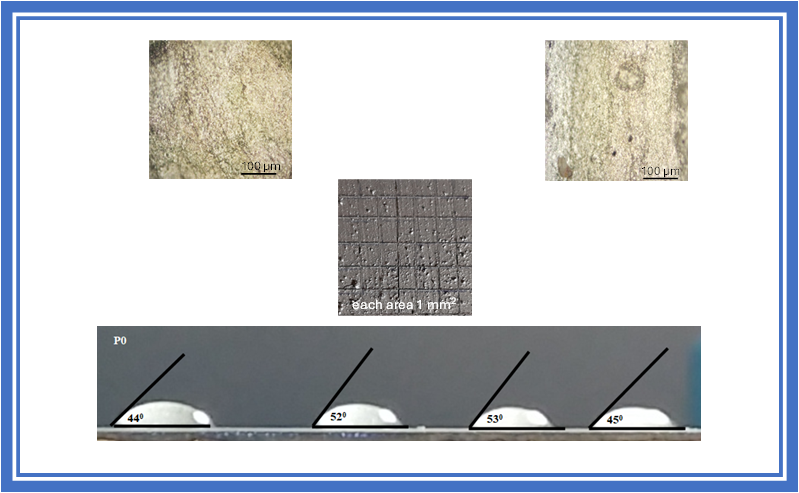
The material used as a coating must have unique characteristics. A frequently used coating material is polyurethane. Even though Polyurethane has been widely used as a coating material, it has limitations in thermal resistance. Incorporating fillers such as carbon and ZnO can improve its thermal, dielectric, and corrosion-resistant properties. Composite films of polyurethane with carbon, ZnO, and a mixture of both were prepared. Characterizations included FTIR, TGA, DSC, XRD, dielectric testing, salt spray, water vapor permeability, hydrophobicity, and adhesion tests. FTIR confirmed the presence of functional groups from the fillers. TGA and DSC showed improved thermal stability, particularly in carbon-filled composites. Salt spray and permeability tests indicated enhanced corrosion resistance in ZnO-filled samples, while dielectric properties improved with carbon addition. Hydrophobicity and adhesion tests met coating material criteria. Among all variants, the polyurethane/carbon composite demonstrated the most favorable combination of thermal, dielectric, and surface properties, making it the most suitable for protective coating applications.
References
[1] S. Y. Moon, J. K. Kim, C. Nah, and Y. S. Lee, “Polyurethane/montmorillonite nanocomposites prepared from crystalline polyols, using 1,4-butanediol and organoclay hybrid as chain extenders,” Eur Polym J, vol. 40, no. 8, pp. 1615–1621, 2004, doi: 10.1016/j.eurpolymj.2004.04.018.
[2] A. Sorrentino, G. Gorrasi, M. Tortora and V. Vittoria, “Barrier properties of polymer/clay nanocomposites,” in Polymer Nanocomposites, Woodhead Publishing, pp. 273–296, 2006.
[3] A. K. Barick and D. K. Tripathy, “Thermal and dynamic mechanical characterization of thermoplastic polyurethane/organoclay nanocomposites prepared by melt compounding,” Materials Science and Engineering A, vol. 527, no. 3, pp. 812–823, 2010, doi: 10.1016/j.msea.2009.10.063.
[4] D. Sarkar and S. T. Lopina, “Oxidative and enzymatic degradations of L-tyrosine based polyurethanes,” Polym Degrad Stab, vol. 92, no. 11, pp. 1994–2004, 2007, doi: 10.1016/j.polymdegradstab.2007.08.003.
[5] V. Melnig, M. O. Apostu, V. Tura, and C. Ciobanu, “Optimization of polyurethane membranes: Morphology and structure studies,” J Memb Sci, vol. 267, no. 1–2, pp. 58–67, 2005, doi: 10.1016/j.memsci.2005.04.054.
[6] E. Ciecierska et al., “Flammability, mechanical properties and structure of rigid polyurethane foams with different types of carbon reinforcing materials,” Compos Struct, vol. 140, pp. 67–76, 2016, doi: 10.1016/j.compstruct.2015.12.022.
[7] P. S. Goh, A. F. Ismail, and B. C. Ng, “Directional alignment of carbon nanotubes in polymer matrices: Contemporary approaches and future advances,” Compos Part A Appl Sci Manuf, vol. 56, pp. 103–126, 2014, doi: 10.1016/j.compositesa.2013.10.001.
[8] J. Pavličević et al., “The influence of ZnO nanoparticles on thermal and mechanical behavior of polycarbonate-based polyurethane composites,” Compos B Eng, vol. 60, pp. 673–679, 2014, doi: 10.1016/j.compositesb.2014.01.016.
[9] O. Kurniawan and B. Soegijono, “Preparation and characterization of polyurethane/carbon/organoclay composite for coating of aluminum conductor overhead lines,” vol. 18, pp. 62–69, 2020, doi: 10.1380/ejssnt.2020.62.
[10] I. Piekarz, J. Sorocki, and M. Bozzi, “Test tube dedicated microwave liquid dielectric sensor for non-contact properties change monitoring and material characterization with tube exchange capability,” Measurement (Lond), vol. 198, 2022, doi: 10.1016/j.measurement.2022.111397.
[11] Anon, “Standard method of salt spray (fog) testing,” ASTM Special Technical Publication, pp. 496–504, 1985.
[12] R. Sattar, A. Kausar, and M. Siddiq, “Thermal, mechanical and electrical studies of novel shape memory polyurethane/polyaniline blends,” Chin J Polym Sci, vol. 33, pp. 1313–1324, 2015, doi: 10.1007/s10118-015-1680-5.
[13] A. Z. Okkema, D. J. Fabrizius, T. G. Grasel, S. L. Cooper, and R. J. Zdrahala, “Bulk, surface and blood-contacting properties of polyether polyurethanes modified with polydimetnylsiloxane macroglycols,” Biomaterials, vol. 10, no. 1, pp. 23–32, 1989, doi: 10.1016/0142-9612(89)90005-7.
[14] E. M. Richter, G. Possart, P. Steinmann, S. Pfaller, and M. Ries, “Revealing the percolation–agglomeration transition in polymer nanocomposites via MD-informed continuum RVEs with elastoplastic interphases,” Compos B Eng, vol. 281, p. 111477, 2024, doi: 10.1016/j.compositesb.2024.111477.
[15] H. Sun et al., “Interfacial polarization and dielectric properties of aligned carbon nanotubes/polymer composites: the role of molecular polarity,” Compos Sci Technol, vol. 154, pp. 145–153, 2018, doi: 10.1016/j.compscitech.2017.11.008.
[16] T. C. Wen, S. L. Hung, and M. Digar, “Effect of polypyrrole on the morphology and ionic conductivity of TPU electrolyte containing LiClO4,” Synth Met, vol. 118, no. 1–3, pp. 11–18, 2001, doi: 10.1016/S0379-6779(00)00272-1.
Downloads
Published
How to Cite
Issue
Section
License
Copyright (c) 2025 Jurnal Konversi Energi dan Manufaktur

This work is licensed under a Creative Commons Attribution 4.0 International License.