Characteristics of Agricultural and Plantation Wastes as Solid Biomass Energy Feedstock: A Systematic Review
DOI:
https://doi.org/10.21009/JKEM.10.2.6Keywords:
renewable energy, properties, sustainability, environment, circular economyAbstract
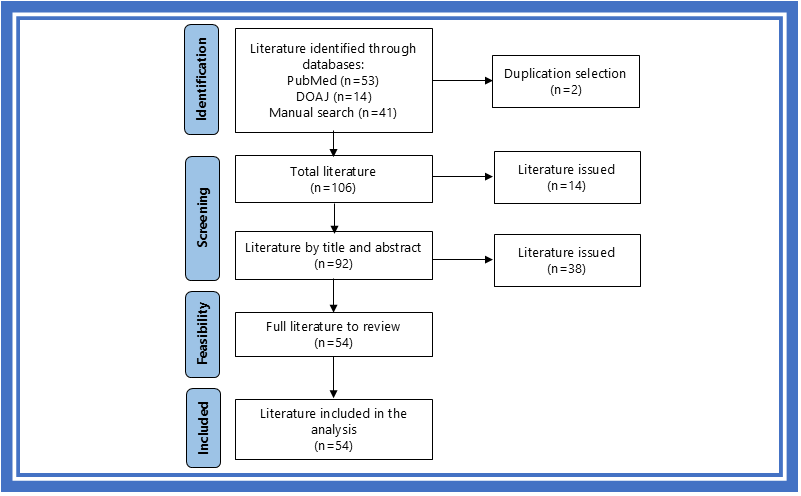
The conversion of agricultural and plantation waste into biomass energy represents a promising pathway in the global transition to environmentally friendly energy sources. However, systematic comparisons of different types of agricultural and plantation biomass waste remain limited. This study aims to identify and evaluate the characteristics of various agricultural and plantation wastes to determine their feasibility as solid biomass energy feedstock. A systematic literature review was conducted using databases such as PubMed, DOAJ, and manual searches, focusing on articles published between 2014 and 2025. A total of 32 relevant studies were selected based on inclusion criteria. The analysis revealed that coconut shells, coffee grounds, and oil palm kernel shells possess superior fuel properties, particularly high calorific values of ≥ 4000 cal/g, making them highly suitable for solid biofuel production. These findings emphasize the strategic potential of agricultural and plantation waste as a sustainable energy source. The study contributes to the advancement of circular economy practices, promotes effective waste management, and supports the achievement of Sustainable Development Goals (SDGs).
References
[1] N. R. Gatkal et al., “Present trends, sustainable strategies and energy potentials of crop residue management in india: a review,” Heliyon, vol. 10, no. 21, p. e39815, 2024, doi: 10.1016/j.heliyon.2024.e39815.
[2] G. Cruz, P. A. Santiago, C. E. M. Braz, P. Seleghim, and P. M. Crnkovic, “Investigation into the physical–chemical properties of chemically pretreated sugarcane bagasse,” J. Therm. Anal. Calorim., vol. 132, no. 2, pp. 1039–1053, 2018, doi: 10.1007/s10973-018-7041-1.
[3] B. V. Bot, O. T. Sosso, J. G. Tamba, E. Lekane, J. Bikai, and M. K. Ndame, “Preparation and characterization of biomass briquettes made from banana peels, sugarcane bagasse, coconut shells and rattan waste,” Biomass Convers. Biorefinery, vol. 13, no. 9, pp. 7937–7946, 2023, doi: 10.1007/s13399-021-01762-w.
[4] A. R. Putra et al., “Characteristics of biopellets manufactured from various lignocellulosic feedstocks as alternative renewable energy sources,” J. Renew. Mater., vol. 12, no. 6, pp. 1103–1123, 2024, doi: 10.32604/jrm.2024.051077.
[5] R. Kabir Ahmad, S. Anwar Sulaiman, S. Yusup, S. Sham Dol, M. Inayat, and H. Aminu Umar, “Exploring the potential of coconut shell biomass for charcoal production,” Ain Shams Eng. J., vol. 13, no. 1, 2022, doi: 10.1016/j.asej.2021.05.013.
[6] M. W. Mbugua, M. W. Kimani, B. N. K. Njoroge, A. N. Gitau, J. M. Mutua, and A. K. Luvai, “Characterization of the physical parameters of coffee husks towards energy production,” Int. J. Emerg. Technol. Adv. Eng., vol. 4, no. 9, pp. 715–720, 2014.
[7] A. Tesfaye, F. Workie, and V. S. Kumar, “Production and characterization of coffee husk fuel briquettes as an alternative energy source,” Adv. Mater. Sci. Eng., vol. 2022, no. 1, pp. 1–13, 2022, doi: 10.1155/2022/9139766.
[8] A. Lukmanto and G. Banowati, “Karakteristik biopelet dari limbah biomassa tanaman dengan perekat tepung,” Pros. Semin. Nas. Pembang. dan Pendidik. Vokasi Pertan., vol. 5, no. 1, pp. 713–727, 2024, doi: 10.47687/snppvp.v5i1.1151.
[9] Zulfian, F. Diba, D. Setyawati, Nurhaida, and E. Roslinda, “Kualitas biopelet dari limbah batang kelapa sawit pada berbagai ukuran serbuk dan jenis perekat,” J. Hutan Lestari, vol. 3, no. 2, pp. 208–216, 2015, doi: 10.26418/jhl.v3i2.10253.
[10] S. Aji, Muchammad, and N. Iskandar, “Karakterisasi pelet biomassa berbahan cocopeat sebagai bahan bakar alternatif,” J. Tek. Mesin, vol. 10, no. 4, pp. 575–580, 2022.
[11] D. Pangga, S. Ahzan, Habibi, A. H. P. Wjaya, and L. S. Utami, “Analisis nilai kalor dan laju pembakaran briket tongkol jagung sebagai sumber energi alternatif,” ORBITA. J. Has. Kajian, Inovasi, dan Apl. Pendidik. Fis., vol. 7, no. 2, pp. 382–386, 2021, doi: 10.31764/orbita.v7i2.5552.
[12] P. S. A. Sitogasa, M. Mirwan, and F. Rosariawari, “Potential of biomass briquettes from tropical fruit waste (study case: durian skin),” Tech. Rom. J. Appl. Sci. Technol., vol. 16, pp. 369–373, 2023, doi: 10.47577/technium.v16i.10012.
[13] M. Lubwama and V. A. Yiga, “Characteristics of briquettes developed from rice and coffee husks for domestic cooking applications in Uganda,” Renew. Energy, vol. 118, pp. 43–55, 2018, doi: 10.1016/j.renene.2017.11.003.
[14] P. Malatji, N. S. Mamphweli, and M. Meincken, “The technical pre-feasibility to use briquettes made from wood and agricultural waste for gasification in a downdraft gasifier for electricity generation for electricity generation Editor,” J. Energy South. Africa, vol. 22, no. 4, pp. 1–7, 2011, doi: 10.17159/2413-3051/2011/v22i4a3224.
[15] H. O. Muraina, J. K. Odusote, and A. A. Adeleke, “Physical properties of biomass fuel briquette from oil palm residues,” J. Appl. Sci. Environ. Manag., vol. 21, no. 4, pp. 777–782, 2017, doi: 10.4314/jasem.v21i4.19.
[16] S. Duangkham and P. Thuadaij, “Heliyon Characterization of charcoal briquettes produced from blending rice straw and banana peel,” Heliyon, vol. 9, no. 6, p. e16305, 2023, doi: 10.1016/j.heliyon.2023.e16305.
[17] Lusyiani, Yuniarti, T. G.A.R., Kurdiansyah, and Sariana, “Quality of Biobrickets From A Mixture of Palm Oil (Arenga pinnata) and Water Hyacinth (Eichhornia crassipes) with 10 Tons Press Pressure,” RJOAS, vol. 133, no. 1, pp. 163–173, 2023, doi: 10.18551/rjoas.2023-01.20.
[18] A. Brunerov, H. Roubik, M. Brozek, D. Herak, V. Sleger, and J. Mazancova, “Potential of Tropical Fruit Waste Biomass for Production of Bio-Briquette Fuel : Using Indonesia as an Example,” Energies, vol. 10, no. 12, pp. 1–22, 2017, doi: 10.3390/en10122119.
[19] C. Setter, K. L. S. Costa, T. J. P. De Oliveira, and R. F. Mendes, “The effects of kraft lignin on the physicomechanical quality of briquettes produced with sugarcane bagasse and on the characteristics of the bio-oil obtained via slow pyrolysis,” Fuel Process. Technol., vol. 210, p. 106561, 2020, doi: 10.1016/j.fuproc.2020.106561.
[20] I. S. Utami, D. Rusdiana, N. Nahadi, I. R. Suwarma, Y. Guntara, N. Amida, N. F. A Rahman, and Y. Oktarisa, “How to make biomass briquettes with their characteristics analysis,” Indones. J. Sci. Technol., vol. 9, no. 3, pp. 585–610, 2024, doi: 10.17509/ijost.v9i3.72170.
[21] W. Cao, J. Li, T. Marti-Rossello, and X. Zhang, “Experimental study on the ignition characteristics of cellulose , hemicellulose , lignin and their mixtures,” J. Energy Inst., vol. 92, no. 5, pp. 1303–1312, 2020, doi: 10.1016/j.joei.2018.10.004.
[22] H. N. Hafiza, M. Masthura, and E. Jumiati, “Pengaruh densitas terhadap kadar air pembuatan briket bioarang kulit dan tongkol jagung,” Bul. Fis., vol. 25, no. 1, pp. 130-134, 2024, doi: 10.24843/bf.2024.v25.i01.p17.
[23] T. Ivanova, A. Muntean, B. lHavrland, and P. Hutla, “Quality assessment of solid biofuel made of sweet sorghum biomass,” BIO Web Conf., vol. 10, p. 02007, 2018, doi: 10.1051/bioconf/20181002007.
[24] D. K. Okot, P. E. Bilsborrow, and A. N. Phan, “Biomass and Bioenergy E ff ects of operating parameters on maize COB briquette quality,” Biomass and Bioenergy, vol. 112, pp. 61–72, 2018, doi: 10.1016/j.biombioe.2018.02.015.
[25] Subardi, S. W. Atmojo, and D. A. Himawanto, “Optimalisasi Pemanfaatan Limbah Pertanian sebagai Energi Alternatif Binderless Biobriquette,” J. Ekosains, vol. 11, no. 1, pp. 32–41, 2019.
[26] O. A. Awwal, O. K. Israel, and Z. Yashim, “Physico-chemical, calorific, and emission performance of briquettes produced from maize cob, sugarcane bagasse, and polythene composites,” Avicenna J. Environ. Heal. Eng., vol. 6, no. 1, pp. 49–54, 2019, doi: 10.34172/ajehe.2019.07.
[27] S. Sohni, N. A. N. Norulaini, R. Hashim, S. B. Khan, W. Fadhullah, and A. K. M. Omar, “Physicochemical characterization of Malaysian crop and agro-industrial biomass residues as renewable energy resources,” Ind. Crops Prod., vol. 111, pp. 642–650, 2018, doi: 10.1016/j.indcrop.2017.11.031.
[28] L. Senila et al., “Characterization of biobriquettes produced from vineyard wastes as a solid biofuel resource,” Agric., vol. 12, no. 3, p. 341, 2022, doi: 10.3390/agriculture12030341.
[29] J. Yirijor and A. A. T. Bere, “Production and characterization of coconut shell charcoal-based bio-briquettes as an alternative energy source for rural communities,” Heliyon, vol. 10, no. 16, p. e35717, 2024, doi: 10.1016/j.heliyon.2024.e35717.
[30] A. Narzary, J. Brahma, and A. K. Das, “Utilization of waste rice straw for charcoal briquette production using three different binder,” Clean. Energy Syst. J., vol. 5, p. 100072, 2023, doi: 10.1016/j.cles.2023.100072.
[31] L. Hakim et al., “Charcoal Briquette manufactured from indonesian sugar palm bunches (arenga longipes mogea) as biomass-based new renewable,” J. Renew. Mater., vol. 13, no. 2, pp. 637-650, 2025, doi: 10.32604/jrm.2025.056365.
[32] M. M. Morales, A. K. Hoshide, L. M. P. Carvalho, and F. D. Tardin, “Sorghum Biomass as an Alternative Source for Bioenergy,” Biomass, vol. 4, no. 3, pp. 1017–1030, 2024, doi: 10.3390/biomass4030057.
[33] M. Zhylina et al., “Granulation and pyrolysis of agricultural residues for an enhanced circular economy,” Results Eng., vol. 26, p. 104919, 2025, doi: 10.1016/j.rineng.2025.104919.
[34] J. E. da Silva et al., “Energetic characterization and evaluation of briquettes produced from naturally colored cotton waste,” Environ. Sci. Pollut. Res., vol. 26, no. 14, pp. 14259–14265, 2019, doi: 10.1007/s11356-019-04777-z.
[35] P. Shrivastava, P. Khongphakdi, A. Palamanit, A. Kumar, and P. Tekasakul, “Investigation of physicochemical properties of oil palm biomass for evaluating potential of biofuels production via pyrolysis processes,” Biomass Convers. Biorefinery, vol. 11, pp. 1987–2001, 2020, doi: 10.1007/s13399-019-00596-x.
[36] A. Shariff, N. S. M. Aziz, N. I. Ismail, and N. Abdullah, “Corn cob as a potential feedstock for slow pyrolysis of biomass,” J. Phys. Sci., vol. 27, no. 2, pp. 123–137, 2016, doi: 10.21315/jps2016.27.2.9.
[37] D. A. Iryani, S. Kumagai, M. Nonaka, K. Sasaki, and T. Hirajima, “Characterization and production of solid biofuel from sugarcane bagasse by hydrothermal carbonization,” Waste and Biomass Valorization, vol. 8, no. 6, pp. 1941–1951, 2017, doi: 10.1007/s12649-017-9898-9.
[38] M. A. Perea-Moreno, F. Manzano-Agugliaro, Q. Hernandez-Escobedo, and A. J. Perea-Moreno, “Peanut shell for energy: properties and its potential to respect the environment,” Sustain., vol. 10, no. 9, pp. 1–15, 2018, doi: 10.3390/su10093254.
[39] O. Bobet et al., “Characterization of Peanut Shells for Their Valorization in Earth Brick,” J. Miner. Mater. Charact. Eng., vol. 8, no. 4, pp. 301–315, 2020, doi: 10.4236/jmmce.2020.84018.
[40] Q. Wang and J. Sarkar, “Pyrolysis behaviors of waste coconut shell and husk biomasses,” Int. J. Energy Prod. Manag., vol. 3, no. 1, pp. 34–43, 2018, doi: 10.2495/EQ-V3-N1-34-43.
[41] M. F. M. Yusop, M. A. Ahmad, N. A. Rosli, F. N. Gonawan, and S. J. Abdullah, “Scavenging malachite green dye from aqueous solution using durian peel based activated carbon,” Malaysian J. Fundam. Appl. Sci., vol. 17, no. 1, pp. 95–103, 2021, doi: 10.11113/mjfas.v17n1.2173.
[42] Y. M. Pusparizkita, A. F. Hidayatullah, N. F. Anwar, J. Junaidi, and S. Sudarno, “Effect of drying duration on the water content of durian peel waste for bio pellet,” in IOP Conf. Ser. Earth Environ. Sci., vol. 1098, p. 012052, 2022, doi: 10.1088/1755-1315/1098/1/012052.
[43] S. Rahmawati, Afadil, Suherman, T. Santoso, P. H. Abram, and Rabasia, “The utilization of durian peels (durio zibethinus) for the manufacturing of charcoal briquettes as alternative fuel,” J. Pengelolaan Sumberd. Alam dan Lingkung., vol. 13, no. 1, pp. 76–87, 2023, doi: 10.29244/jpsl.13.1.76-87.
[44] S. B. Kang, H. Y. Oh, J. J. Kim, and K. S. Choi, “Characteristics of spent coffee ground as a fuel and combustion test in a small boiler (6.5 kW),” Renew. Energy, vol. 113, pp. 1208–1214, 2017, doi: 10.1016/j.renene.2017.06.092.
[45] R. Manrique, D. Vásquez, C. Ceballos, F. Chejne, and A. Amell, “Evaluation of the energy density for burning disaggregated and pelletized coffee husks,” ACS Omega, vol. 4, no. 2, pp. 2957–2963, 2019, doi: 10.1021/acsomega.8b02591.
[46] A. I. D. Lantasi, Syafrudin, and Budiyono, “Rice husk as renewable energy for biogas production from biomass: prospect and challenges,” E3S Web Conf., vol. 202, p. 06024, 2020, doi: 10.1051/e3sconf/202020206024.
[47] Y. Dai, H. Zheng, Z. Jiang, and B. Xing, “Comparison of different crop residue-based technologies for their energy production and air pollutant emission,” Sci. Total Environ., vol. 707, p. 136122, 2020, doi: 10.1016/j.scitotenv.2019.136122.
[48] H. Tambunan, A. Nuryawan, A. H. Iswanto, I. Risnasari, M. Basyuni, and W. Fatriasari, “Briquettes made of branches wood of three mangrove species bonded by starch adhesive,” Materials (Basel)., vol. 16, no. 15, p. 5266, 2023, doi: 10.3390/ma16155266.
[49] K. Roman et al., “Dispersed power production in terms of the potential of briquettes made from straw and willow as renewable sources of energy,” Materials (Basel)., vol. 15, no. 15, p. 5235, 2022, doi: 10.3390/ma15155235.
[50] A. Niño, N. Arzola, and O. Araque, “Experimental study on the mechanical properties of biomass briquettes from a mixture of rice husk and pine sawdust,” Energies, vol. 13, no. 5, p. 1060, 2020, doi: 10.3390/en13051060.
[51] E. O. Ajala, J. O. Ighalo, M. A. Ajala, A. G. Adeniyi, and A. M. Ayanshola, “Sugarcane bagasse : a biomass sufficiently applied for improving global energy, environment and economic sustainability,” Bioresour. Bioprocess., vol. 8, p. 87, 2021, doi: 10.1186/s40643-021-00440-z.
[52] N. H. D. Djoukouo, B. M. K. Djousse, H. G. Djoukeng, D. A. M. Egbe, B. D. Wembe, and F. C. Kouonang, “Study of ecological charcoal production from agricultural waste,” E3S Web Conf., vol. 354, p. 03007, 2022, doi: 10.1051/e3sconf/202235403007.
[53] D. Atstaja, N. Cudecka-Purina, V. Koval, J. Kuzmina, J. Butkevics, and H. Hrinchenko, “Waste-to-energy in the circular economy transition and development of resource-efficient business models,” Energies, vol. 17, no. 16, pp. 1–23, 2024, doi: 10.3390/en17164188.
[54] M. Nematian, C. Keske, and J. N. Ng’ombe, “A techno-economic analysis of biochar production and the bioeconomy for orchard biomass,” Waste Manag., vol. 135, 2022, pp. 467–477, 2021, doi: 10.1016/j.wasman.2021.09.014.
Downloads
Published
How to Cite
Issue
Section
License
Copyright (c) 2025 Jurnal Konversi Energi dan Manufaktur

This work is licensed under a Creative Commons Attribution 4.0 International License.