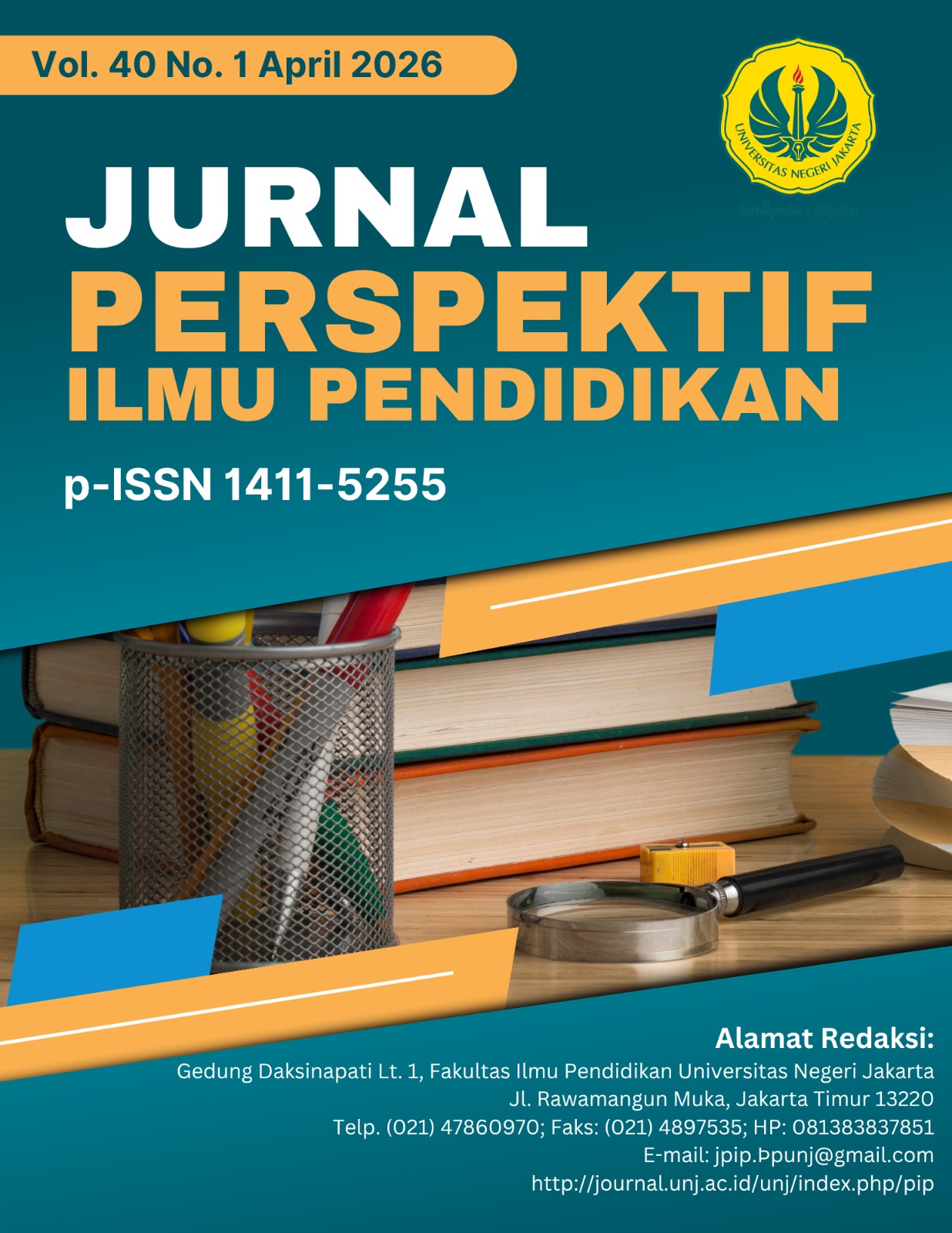
Intention to Use AI in Economics Learning: The Role of AI Literacy and Attitude toward AI
DOI:
https://doi.org/10.21009/PIP.401.9Keywords:
Artificial Intelligence Literacy, Attitude toward AI, Economics Learning, Intention to Use AI, Technology Acceptance ModelAbstract
The swift progress of intelligent technologies has modified how learning is delivered, including the way economics is taught and learned in senior high schools. However, students' willingness to use AI depends not only on whether they have access to technology but also on their understanding of AI and their feelings about it.This study looks at how AI literacy affects students' desire to use AI in economics learning, while also looking at how their attitude toward AI plays a role in this process. A quantitative method was employed, involving 170 students from SMA Negeri 4 Surabaya. Data was gathered through a multiple-choice questionnaire, and the results were analyzed using WarpPLS 8.0 with Partial Least Squares Structural Equation Modelling (PLS-SEM). The data suggest learners’ views toward and desire to employ AI are positively impacted by AI literacy. Furthermore, students' attitudes regarding AI have an impact on their intention to utilise it, which contributes to the explanation of the connection between AI literacy and students' willingness to use AI to learn economics. These findings show how important it is to improve students' understanding of AI and help them form thoughtful, caring, and positive attitudes towards using AI in education.
Downloads
Published
How to Cite
Issue
Section
License
Copyright (c) 2026 Erike Aura Aprilia Kirana, Retno Mustika Dewi

This work is licensed under a Creative Commons Attribution-NonCommercial-ShareAlike 4.0 International License.
Authors who publish with this Journal agree to the following terms:
- Author retain copyright and grant the journal right of first publication with the work simultaneously licensed under a creative commons attribution licensethat allow others to share the work within an acknowledgement of the work’s authorship and initial publication of this journal.
- Authors are able to enter into separate, additional contractual arrangementfor the non-exclusive distribution of the journal’s published version of the work (e.g. acknowledgement of its initial publication in this journal).
- Authors are permitted and encouraged to post their work online(e.g. in institutional repositories or on their websites) prior to and during the submission process, as it can lead to productive exchanges, as well as earlier and greater citation of published works.
-
Users/public use of this website will be licensed to CC BY-NC-SA Creative Commons Attribution-NonCommercial-ShareAlike 4.0 International License