Peer Review Process
Peer Review Process
JSQ: Jurnal Studi Al-Qur'an
All manuscripts submitted to JSQ undergo a rigorous, transparent, and ethical double-blind peer review process to ensure academic quality, originality, and scholarly integrity. Both authors and reviewers remain anonymous throughout the evaluation process. Manuscripts are evaluated based on scholarly merit, methodological rigor, theoretical contribution, and relevance to the journal's scope in both local and global contexts.
Review Workflow at a Glance
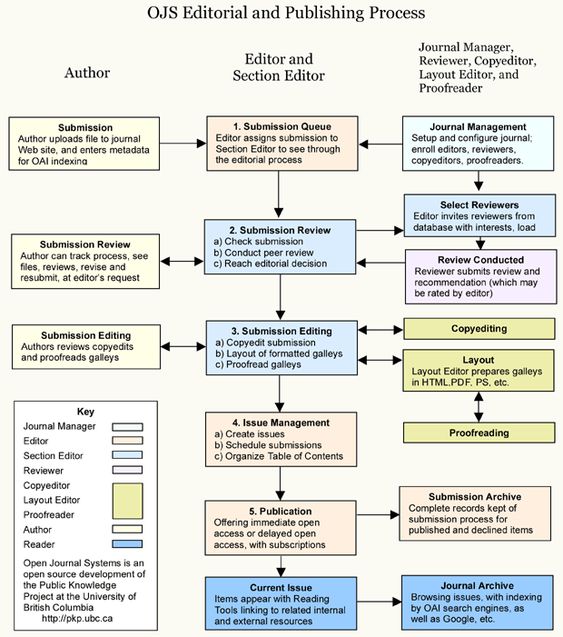
Click the image to view it in full size. Each stage is described below.
1. Initial Evaluation (1–2 weeks)
Upon submission via OJS, the Editorial Team conducts a preliminary screening to verify that:
- The manuscript aligns with the journal’s aim and scope.
- The submission complies with publication and formatting requirements.
- The similarity index does not exceed 20%.
- Ethical standards and anonymization requirements for double-blind review are fulfilled.
Possible outcomes: Desk rejection (if outside scope or high similarity), return for technical revision, or proceed to Reviewer Assignment.
2. Assignment to Handling Editor and Reviewers (1–2 weeks)
A handling editor is appointed to manage the review process. A minimum of two independent reviewers with relevant subject expertise are selected. Reviewers must be affiliated with institutions different from those of all authors and must have no conflict of interest with them (see Conflict of Interest). Author-identifying information must be removed from the manuscript and submitted separately in the Title Page file.
3. Review Process (3–4 weeks)
Reviewers evaluate the manuscript based on the following criteria:
- Originality: Novelty of the research question, argument, or findings.
- Relevance: Contribution to the journal's focus on Qur'anic Educational Transformation.
- Theoretical and Analytical Depth: Strength of the theoretical or conceptual framework and the quality of interpretation.
- Methodological Rigor: Appropriateness of the research design, data, and analysis, including exegetical or textual approaches.
- Accuracy of Sources: Correct citation of Qur'anic verses, tafsir, and hadith; transliteration; and the relevance and currency of references.
- Clarity: Coherence of structure and argument, and quality of language.
- Research Ethics: Compliance with the Ethical Clearance and publication ethics requirements.
Reviewers provide detailed, constructive comments and submit one of the following recommendations: Accept, Minor Revision, Major Revision, or Reject. The final decision rests solely with the Editor-in-Chief.
4. First Editorial Decision (5–7 weeks from submission)
Based on reviewer reports and editorial assessment, the handling editor prepares a recommendation. The Editor-in-Chief issues the official first decision. If reviewers' opinions diverge significantly, an additional reviewer may be invited. Authors receive anonymized reviewer comments and clear revision instructions.
5. Revision Process
- Minor Revision: Authors are granted 2–3 weeks. Evaluated by the handling editor without further external review.
- Major Revision: Authors are given 3–5 weeks. Re-evaluated by original reviewers (2–3 additional weeks).
Authors must submit a revised manuscript with clearly indicated changes and a detailed point-by-point response to reviewer comments.
6. Final Decision (10–16 weeks total)
After completion of revision and re-review stages, the Editor-in-Chief issues the final decision: Accept, Accept with minor editorial adjustments, or Reject. The overall process duration depends on the extent of revisions and reviewer availability.
7. Production and Publication (2–3 weeks post-acceptance)
Upon acceptance, the manuscript undergoes copyediting, layout preparation, and formatting. Authors review proofs prior to publication. The article is assigned a DOI and published online.
Confidentiality and Ethical Conduct
All participants in the review process, including editors, reviewers, and editorial staff, must uphold strict confidentiality and ethical standards:
- Manuscripts are confidential documents. They must not be shared, discussed with unauthorized persons, or uploaded to generative AI tools.
- Reviewers must not attempt to identify the authors and must not use unpublished information for personal advantage.
- Reviewers must disclose any conflict of interest and decline the assignment when necessary.
- Reviewers who suspect plagiarism, data fabrication, or other misconduct should inform the editor and not investigate it themselves (see Research Misconduct).
Commitment to Quality
JSQ is committed to maintaining high standards of academic integrity, ethical publishing practices, and editorial independence. All manuscripts are evaluated objectively and free from conflicts of interest to ensure the publication of high-quality scholarly research.
JSQ continuously evaluates and improves its peer review process. Feedback from authors and reviewers is welcomed at jurnalstudialquran@unj.ac.id and is used to enhance the fairness, efficiency, and rigor of the journal's editorial practices.