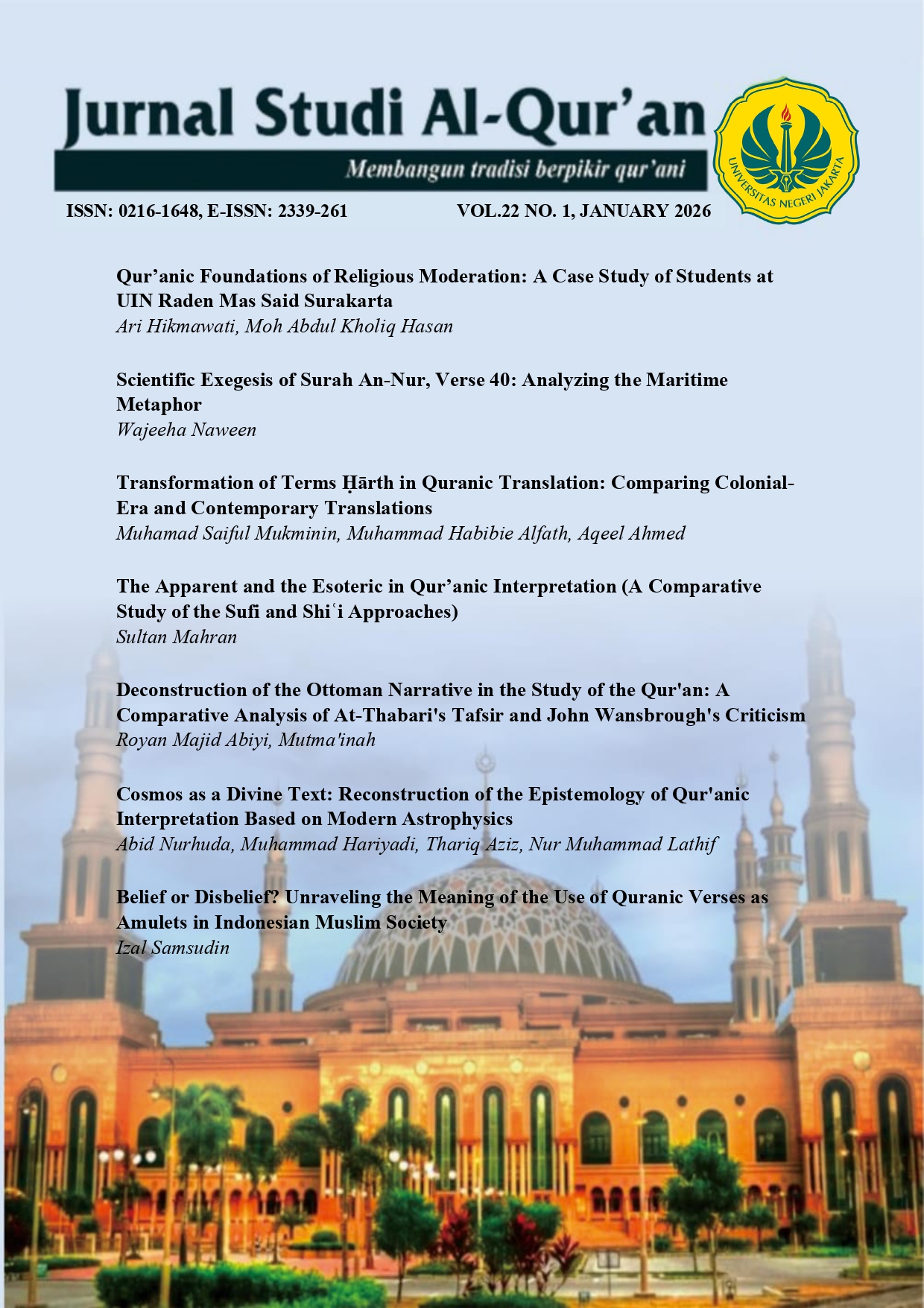
The Apparent and the Esoteric in Qur’anic Interpretation (A Comparative Study of the Sufi and Shiʿi Approaches)
DOI:
https://doi.org/10.21009/JSQ.22.1.04Keywords:
Qur’anic Interpretation, Allegorical Interpretation, Esoteric Interpretation, Sufism, ShiʿismAbstract
The diversity of interpretations of the Qur'an has played a significant role in enriching Islamic thought throughout history. Among the methods that have attracted attention are Sufi allegorical (ishārī) and Shia esoteric (bāṭinī) interpretations, both of which emphasize the revelation of the text's inner meaning. However, ambiguity often arises regarding the methodological similarities or differences between the two. This study aims to examine the fundamental differences between these two approaches and their implications for understanding the Qur'an. It addresses whether Sufi and Shia interpretations share a common methodological framework for accessing the inner meaning or follow different paths. A comparative analytical methodology is employed, drawing on classical exegetical sources from both traditions. Examples are analyzed based on consistent criteria, including linguistic context, theoretical foundations, and doctrinal assumptions. The results reveal a fundamental difference; Sufi interpretation is rooted in spiritual contemplation and symbolism, while Shia interpretation is tied to Imami doctrine. Therefore, it is recommended that Islamic studies scholars refrain from generalizing about the forms of esoteric interpretation and conduct further studies to explore how these differences influence inter-school dialogue in the modern era.
References
القرآن الكريم.
ابن بلبان الفارسي، الإحسان في تقريب صحيح ابن حبان، تحقيق: شعيب الأرناؤوط (بيروت: مؤسسة الرسالة، 1993)
ابن جرير الطبري، جامع البيان عن تأويل آي القرآن، تحقيق: عبد الله بن عبد المحسن التركي، (القاهرة: دار هجر، 2001)
أبو إسحاق الشاطبي، الموافقات، تحقيق: مشهور بن حسن آل سلمان (القاهرة: دار ابن عفان، 1997)
أبو بكر البزار، البحر الزخار، تحقيق: عادل بن سعد (المدينة المنورة: مكتبة العلوم والحكم، 2009)
أحمد بن فارس القزويني، معجم مقاييس اللغة، تحقيق: عبدالسلام محمد هارون (بيروت: دار الفكر، 1979).
جلال الدين السيوطي، الإتقان في علوم القرآن، تحقيق: محمد أبو الفضل إبراهيم (القاهرة: الهيئة المصرية العامة للكتاب، 1974)
د. حسين علي عكاش، "التفسير الصوفي الإشاري للقرآن الكريم: منهج الاستنباط والدلالة الجديدة"، مجلة العلوم الإنسانية والتطبيقية، 17، (2008): 43-74.
زين بن سميط، الفيوضات الربانية من أنفاس السادة العلوية (تريم: دار العلم والدعوة، ب.ت.)
عبد الكريم القشيري، لطائف الإشارات، تحقيق: عبداللطيف حسن عبدالرحمن، (بيروت: دار الكتب العلمية، 2007)
علي محسن جبر وعلاء فليح حسن، "حجية التفسير الباطني"، مجلة آداب الكوفة، 56 3، (2023): 442-463.
الفخر الرازي، مفاتيح الغيب (بيروت: دار إحياء التراث العربي، 1999)
محمد الصالح ستي، "التفسير الباطني عند الشيعة والتفسير الإشاري المقبول -دراسة مقارنة-"، مجلة المعيار، 48 23، (2009): 1-20.
محمد بن مسعود العياشي، التفسير، تحقيق: قسم الدراسات الإسلامية – مؤسسة البعثة – قم (طهران: مؤسسة البعثة، 2000)
محمد هادي معرفة، التفسير والمفسرون في ثوبه القشيب (مشهد: الجامعة الرضوية للعلوم الإسلامية، 1997).
أ.د. مشعان العيساوي، التفسير الإشاري ماهيته وضوابطه، (بيروت: دار الكتب العلمية، 2013)
Downloads
Published
How to Cite
Issue
Section
License
Copyright (c) 2026 Sultan Mahran (Author)

This work is licensed under a Creative Commons Attribution 4.0 International License.
Authors who publish with this Journal agree to the following terms:
- Author retain copyright and grant the journal right of first publication with the work simultaneously licensed under a creative commons attribution licensethat allow others to share the work within an acknowledgement of the work’s authorship and initial publication of this journal.
- Authors are able to enter into separate, additional contractual arrangementfor the non-exclusive distribution of the journal’s published version of the work (e.g. acknowledgement of its initial publication in this journal).
- Authors are permitted and encouraged to post their work online(e.g. in institutional repositories or on their websites) prior to and during the submission process, as it can lead to productive exchanges, as well as earlier and greater citation of published works.
Users/public use of this website will be licensed to CC BY