
Archives
-
Hayula: Indonesian Journal of Multidisciplinary Islamic Studies
Vol. 10 No. 2 (2026)Geographical Diversity of Authors:


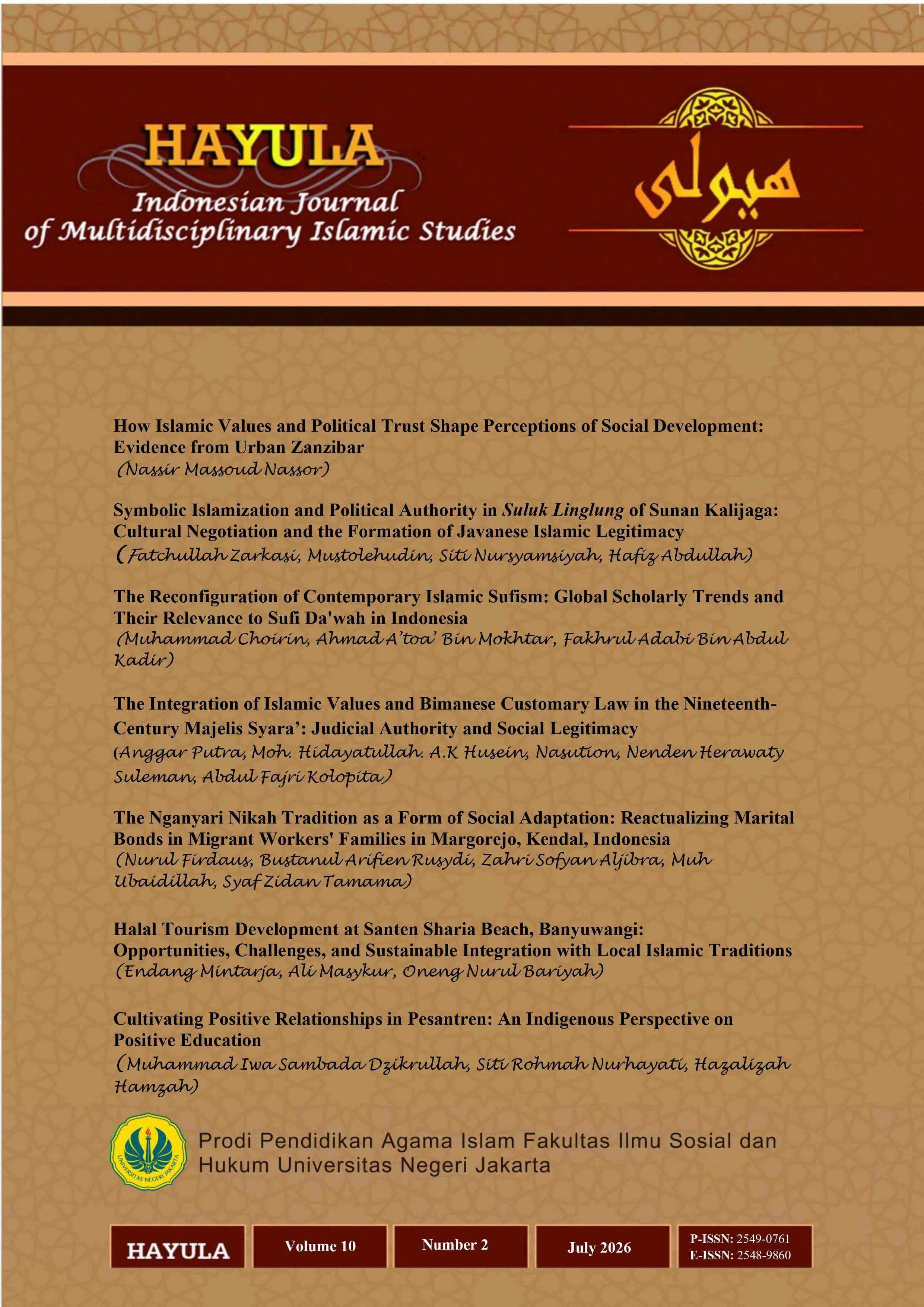
This issue explores a wide range of topics, including how Islamic values and political trust shape perceptions of social development in urban Zanzibar, symbolic Islamization and political authority in the Suluk Linglung of Sunan Kalijaga, and the reconfiguration of contemporary Islamic Sufism and its relevance to Sufi da'wah in Indonesia. Furthermore, this edition covers the historical integration of Islamic values and Bimanese customary law in the nineteenth-century Majelis Syara’, the Nganyari Nikah tradition as a form of social adaptation in migrant workers' families in Kendal, halal tourism development at Santen Sharia Beach in Banyuwangi, and cultivating positive relationships through an indigenous perspective in pesantren. In alignment with our global academic outreach, the contributing authors represent a diverse group of esteemed scholars affiliated with academic institutions from Indonesia, Tanzania, Egypt, Pakistan, Malaysia, and Saudi Arabia. This international representation reflects the richness of scholarly perspectives and the global relevance of the themes discussed in contemporary Islamic studies.
-

Hayula: Indonesian Journal of Multidisciplinary Islamic Studies
Vol. 10 No. 1 (2026)Geographical Diversity of Authors:


This issue presents a unified exploration of how Islamic perspectives engage with local culture, education, and social change. It examines traditional parafu medis practices through Islamic legal viewpoints and analyzes ASN governance guided by religious ethics. The discussion includes the academic motivations of Indonesian and Egyptian university students shaped by diverse cultural backgrounds. It also highlights the growing trend of marriage delay among Muslim youth and investigates language learning approaches that integrate STEM with local wisdom. Finally, it reflects on the influence of technology on Muslim family life, illustrating the dynamic relationship between faith, culture, and modernity. The contributing authors represent a diverse range of academic institutions from Indonesia, Malaysia, Uzbekistan, the Netherlands, Egypt, the Philippines, and Saudi Arabia, reflecting the international character of this issue and the richness of scholarly perspectives brought to contemporary Islamic studies. This geographical diversity further demonstrates the global relevance of the themes discussed, particularly in understanding the dynamic interaction between Islamic values, local traditions, education, governance, technology, and social transformation.
-

Hayula: Indonesian Journal of Multidisciplinary Islamic Studies
Vol. 9 No. 2 (2025)Geographical Diversity of Authors:


This issue explores a wide range of topics within contemporary Islamic studies, including the adaptation of Islamic law during global crises, the integration of madrasah diniyah into formal education systems, and the contribution of Islamic mass organizations to local religious history. Furthermore, this edition covers traditional Islamic practices in Bima, the cultivation of character education values, digital da'wah, and a critical reassessment of Azyumardi Azra’s perspectives on Islamic identity in the era of globalization. In alignment with our global academic outreach, the contributing authors represent a diverse group of esteemed scholars affiliated with academic institutions from Indonesia and Nigeria. This international representation reflects the richness of scholarly perspectives and the global relevance of the themes discussed in understanding the dynamic interactions between Islamic thought, education, local culture, and contemporary social change.
-
Hayula: Indonesian Journal of Multidisciplinary Islamic Studies
Vol. 9 No. 1 (2025)Geographical Diversity of Authors:
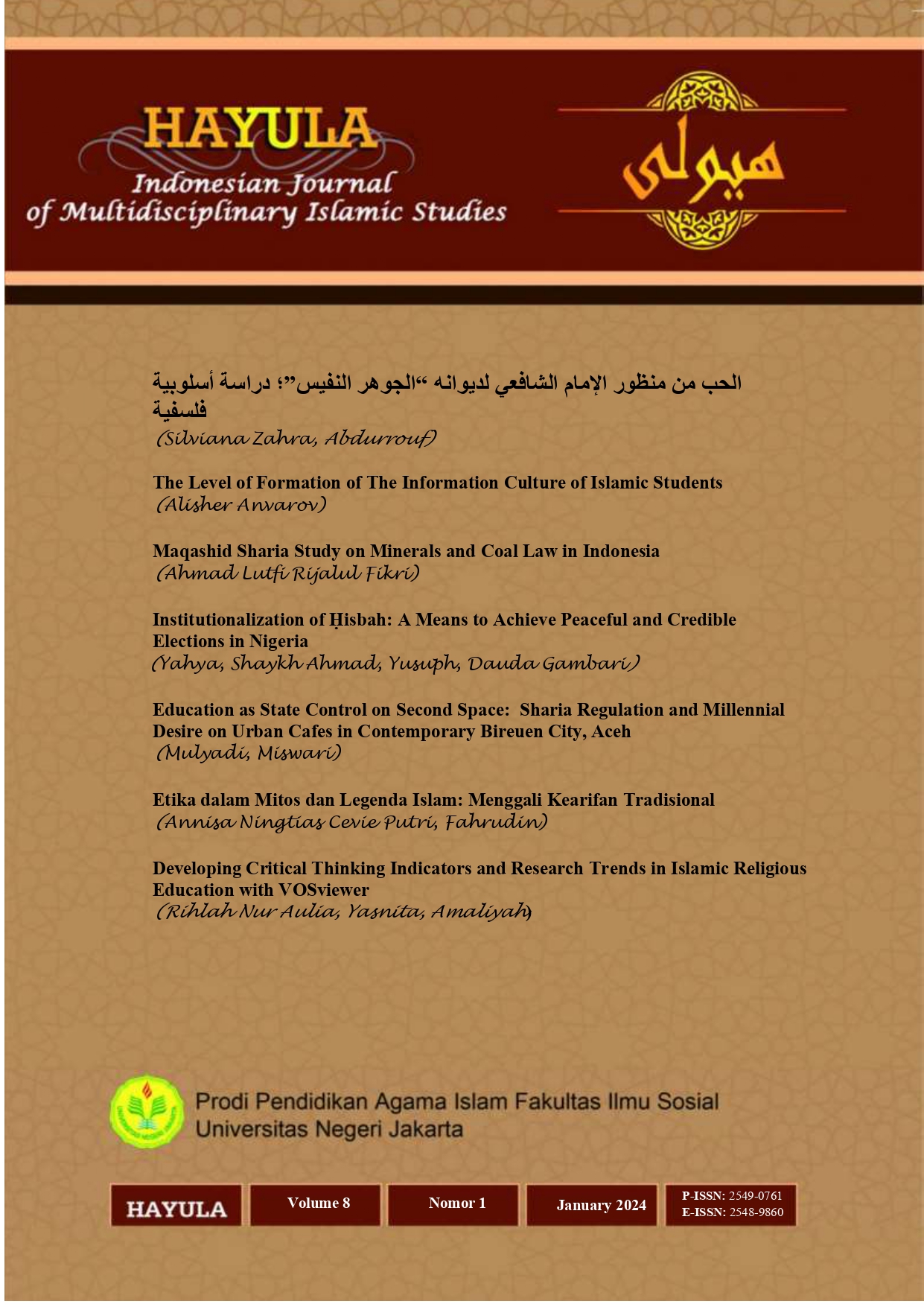
This issue explores a wide range of topics, including sociological research on religious communities and local Muslim diversity, human rights from the perspective of religious moderation, and contemporary Islamic law in Indonesia. Furthermore, this edition covers the tradition of the pilgrimage among Muslim communities, the work ethic in Muslim contexts, and the historical contribution of Arabic scholarship to the development of natural, cultural, social, and religious sciences and its impact on European intellectuals during the Renaissance. In alignment with our global academic outreach, the contributing authors represent a diverse group of esteemed scholars affiliated with academic institutions from Indonesia. This scholarly representation reflects the richness of multidisciplinary perspectives and the global relevance of connecting local Muslim experiences with broader historical and international discourses in contemporary Islamic studies.
-
Hayula: Indonesian Journal of Multidisciplinary Islamic Studies
Vol. 8 No. 2 (2024)Geographical Diversity of Authors:


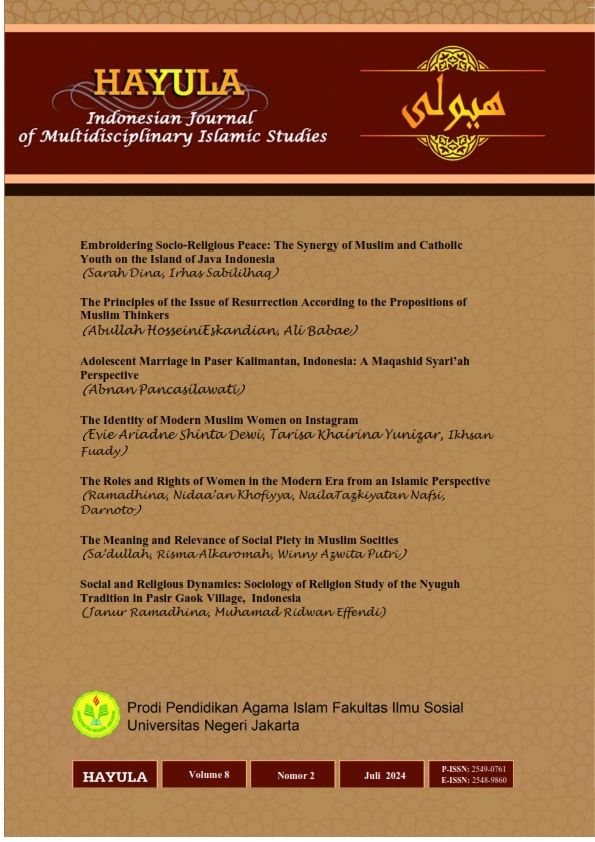
This issue explores a wide range of topics, including interreligious harmony in Indonesia, Muslim thinkers' philosophical perspectives on the Day of Resurrection, and Islamic legal traditions (fiqh) regarding teenage marriage in the Paser region of Kalimantan. Furthermore, this edition covers gender studies concerning the hijab and Muslim women's identity, women's roles and rights in the modern era from an Islamic perspective, the meaning and social implications of religious piety, and a sociological examination of the Nyuguh ritual culture in Pasir Gaok, Indonesia. In alignment with our global academic outreach, the contributing authors represent a diverse group of esteemed scholars affiliated with academic institutions from Indonesia and Iran. This international representation reflects the richness of scholarly perspectives and the global relevance of the themes discussed in contemporary Islamic studies.
-
Hayula: Indonesian Journal of Multidisciplinary Islamic Studies
Vol. 8 No. 1 (2024)Geographical Diversity of Authors:


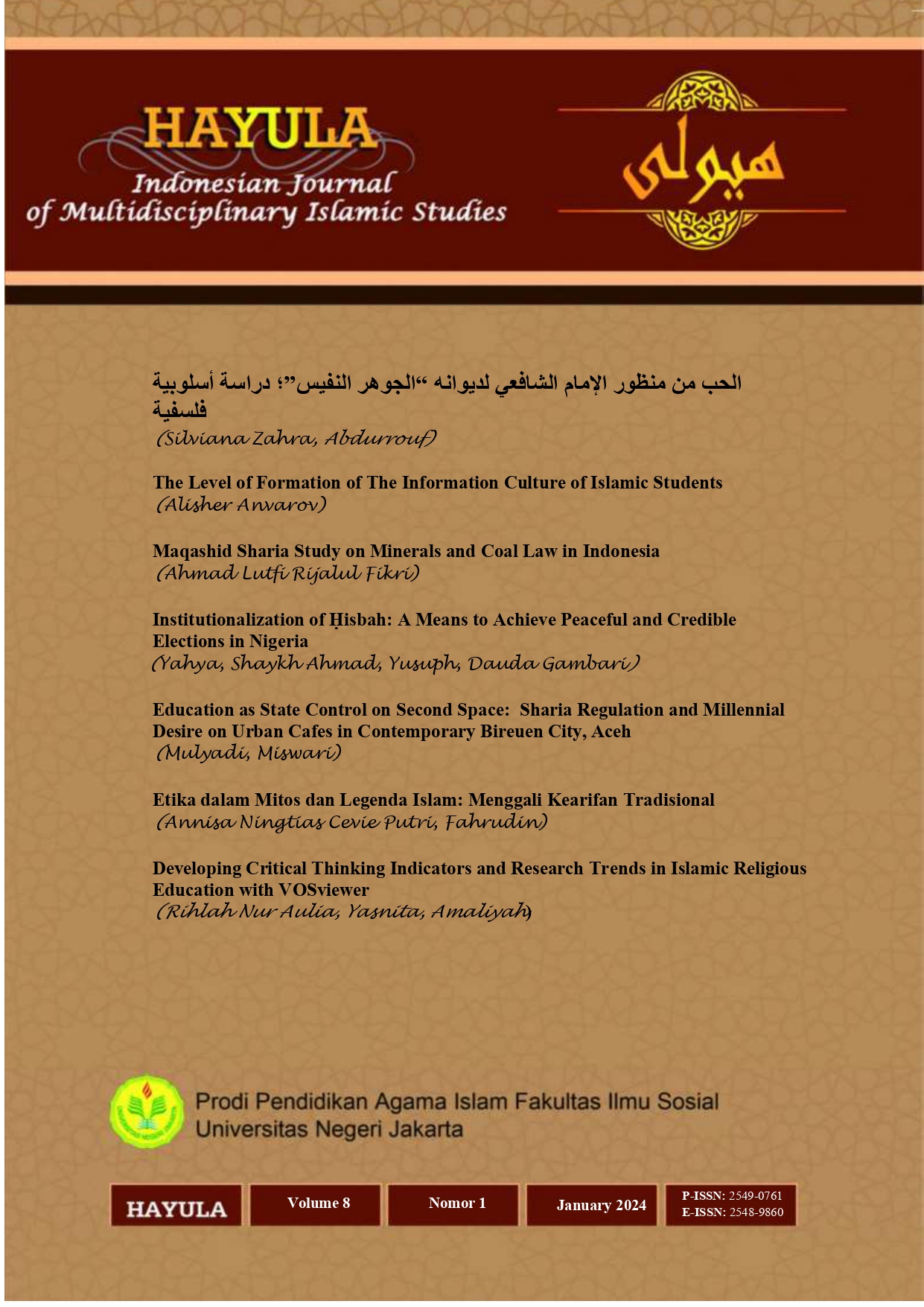
This issue explores a wide range of topics, including Arabic literary studies on love from Imam Shafie's perspective, ethics and information culture for students in Islamic educational institutions of Uzbekistan, and a Maqashid Sharia study on minerals and coal law in Indonesia. Furthermore, this edition covers the concept of Hisbah and its implications for elections in Nigeria, religious education for Aceh millennials facing social change, Islamic myths and legends as a source of learning ethics, and the development of Islamic education indicators with VOSviewer. In alignment with our global academic outreach, the contributing authors represent a diverse group of esteemed scholars affiliated with academic institutions from Indonesia, Uzbekistan, and Nigeria. This international representation reflects the richness of scholarly perspectives and the global relevance of the themes discussed in contemporary Islamic studies.
-
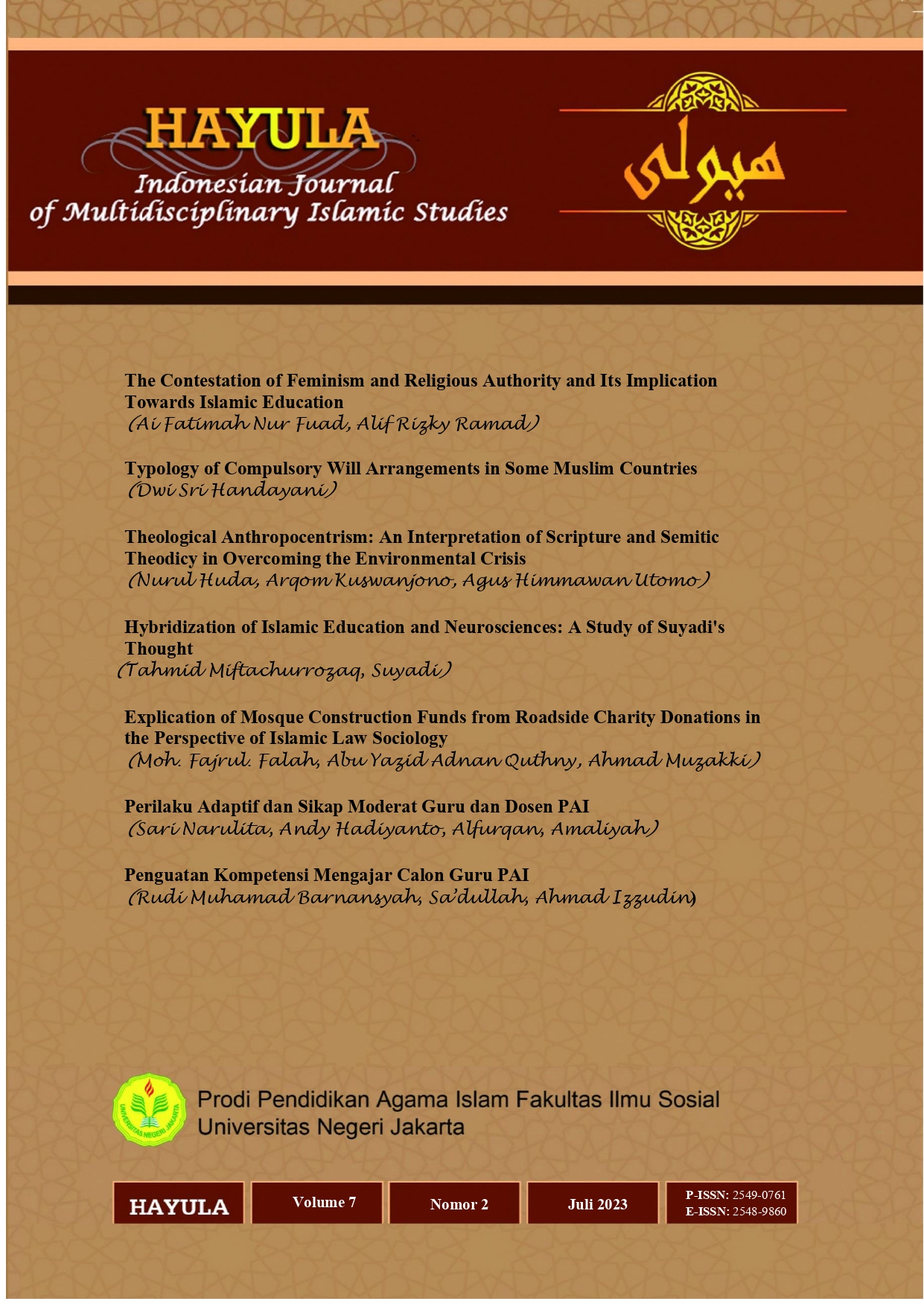
Hayula: Indonesian Journal of Multidisciplinary Islamic Studies
Vol. 7 No. 2 (2023)Geographical Diversity of Authors:

This issue explores a wide range of topics, including the contestation of feminism and religious authority and its implications for Islamic education, the typology of compulsory will arrangements across Muslim countries, and theological anthropocentrism in addressing the environmental crisis through scripture and Semitic theodicy. Furthermore, this edition covers the hybridization of Islamic education and neuroscience in Suyadi's thought, a sociological and Islamic legal analysis of roadside mosque donation practices, the adaptive behavior and moderate attitudes of Islamic education teachers and lecturers, and strategies for strengthening the pedagogical competence of prospective Islamic education teachers. In alignment with our global academic outreach, the contributing authors represent a diverse group of esteemed scholars affiliated with academic institutions from Indonesia. This scholarly representation reflects the richness of multidisciplinary perspectives and the global relevance of connecting local Muslim experiences with contemporary discourses in Islamic studies.
-
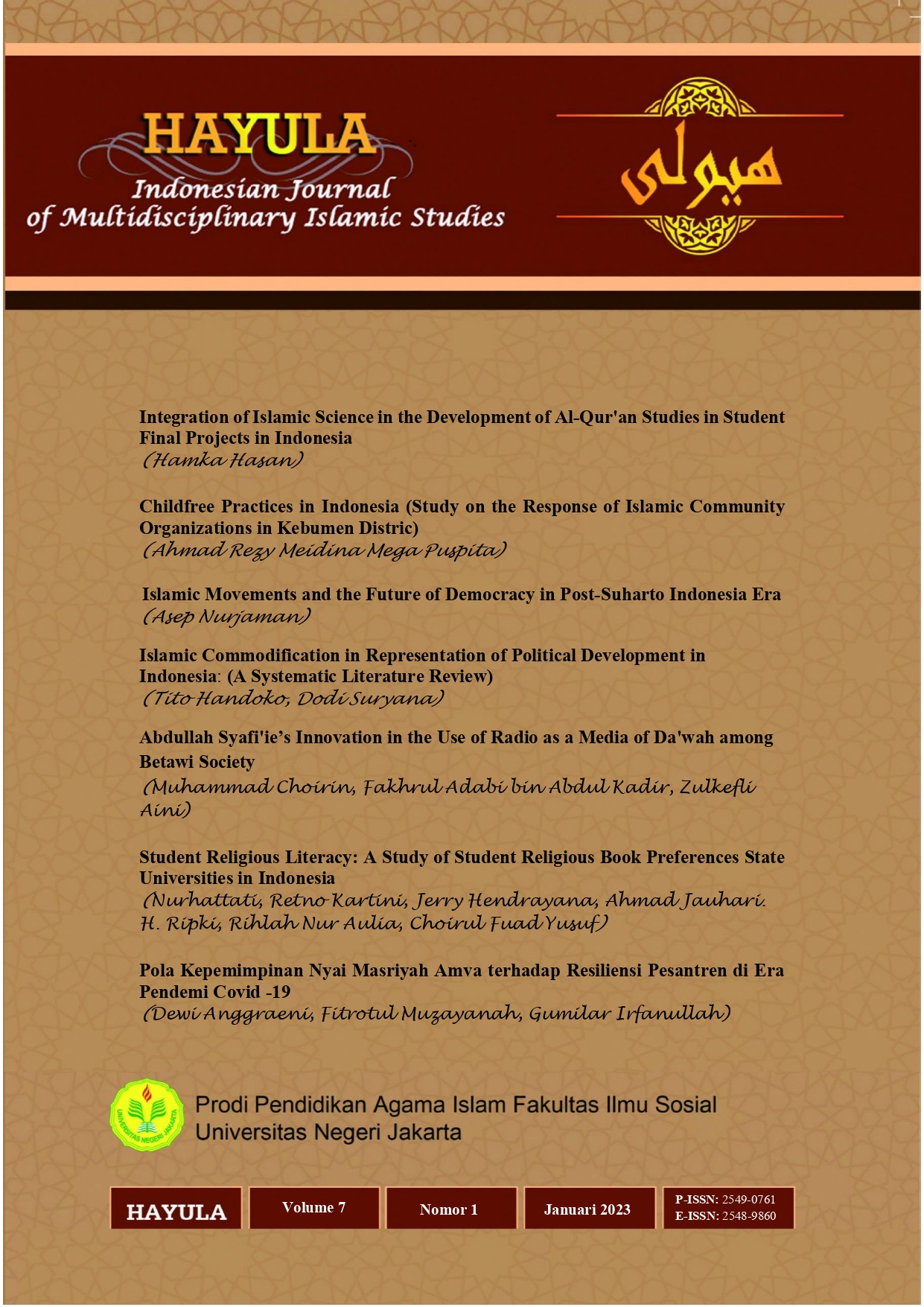
Hayula: Indonesian Journal of Multidisciplinary Islamic Studies
Vol. 7 No. 1 (2023)Geographical Diversity of Authors:


This issue explores a wide range of topics, including the integration of Islamic science in Qur'anic studies within student final projects, community organization responses to childfree practices in Kebumen, and the trajectory of Islamic movements and democracy in post-Suharto Indonesia. Furthermore, this edition covers the commodification of Islam in political development, Abdullah Syafi'ie's innovative use of radio for da'wah among the Betawi society, religious literacy and book preferences among state university students, and Nyai Masriyah Amva's leadership model in sustaining pesantren resilience during the COVID-19 pandemic. In alignment with our global academic outreach, the contributing authors represent a diverse group of esteemed scholars affiliated with academic institutions from Indonesia and Malaysia. This international representation reflects the richness of scholarly perspectives and the global relevance of the themes discussed in contemporary Islamic studies.
-
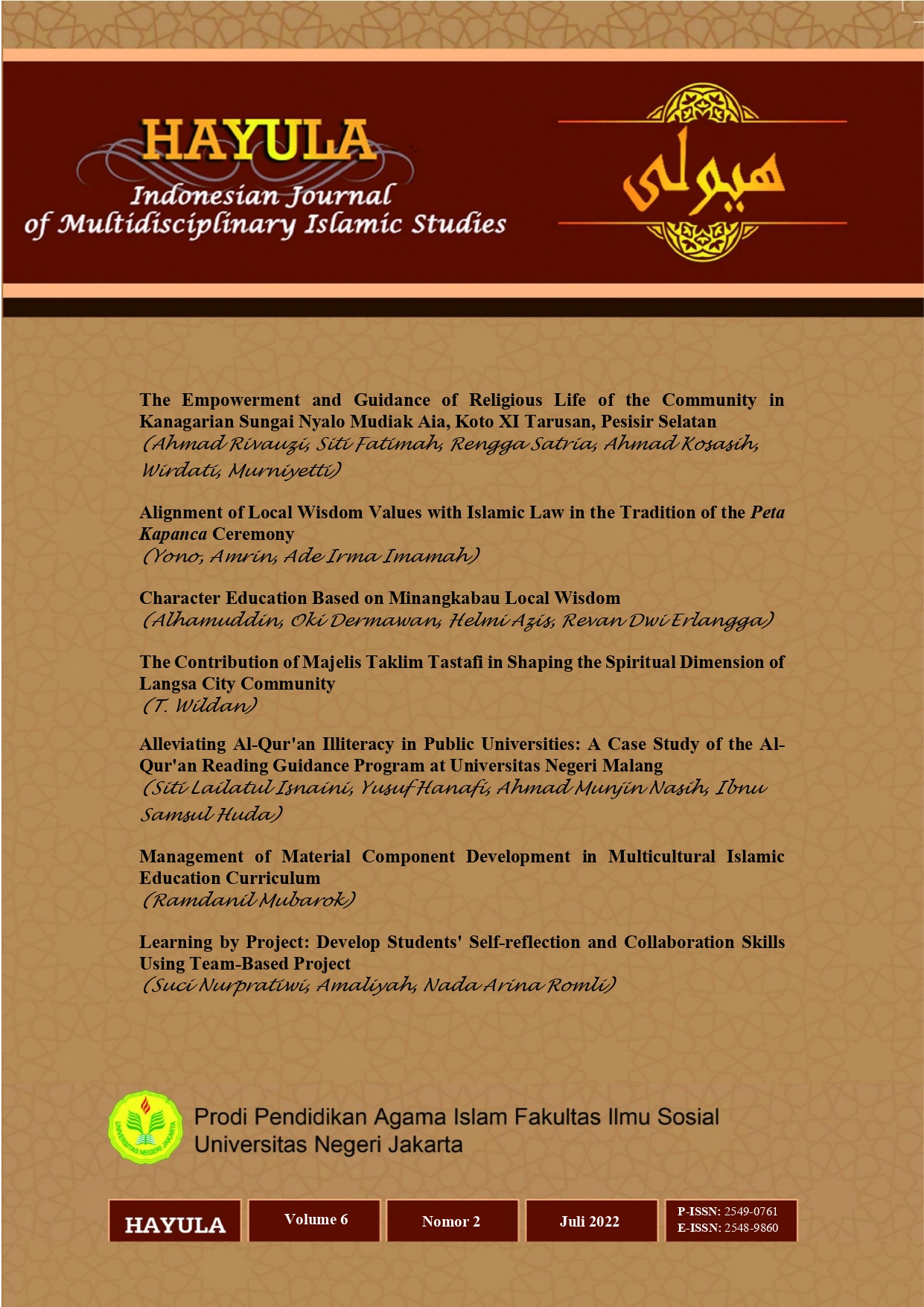
Hayula: Indonesian Journal of Multidisciplinary Islamic Studies
Vol. 6 No. 2 (2022)Geographical Diversity of Authors:

This issue explores a wide range of multidisciplinary topics in Islamic studies and education, including the empowerment and guidance of community religious life in Kanagarian Sungai Nyalo Mudiak Aia (Pesisir Selatan), the alignment of local wisdom values with Islamic law in the Peta Kapanca ceremonial tradition, and character education grounded in Minangkabau local wisdom. Furthermore, this edition examines the role of Majelis Taklim Tastafi in shaping the spiritual dimension of the Langsa City community, strategies for alleviating Qur’anic illiteracy through reading guidance programs at Universitas Negeri Malang, material component development management within multicultural Islamic education curricula, and the implementation of team-based project learning to enhance students' self-reflection and collaboration skills. The contributing authors represent a diverse group of scholars affiliated with various higher education and academic institutions across Indonesia. This geographical and institutional representation reflects a rich array of scholarly perspectives and underscores the dynamic intersection between Islamic values, local cultural traditions, community development, and innovative educational practices within the Indonesian context.
-
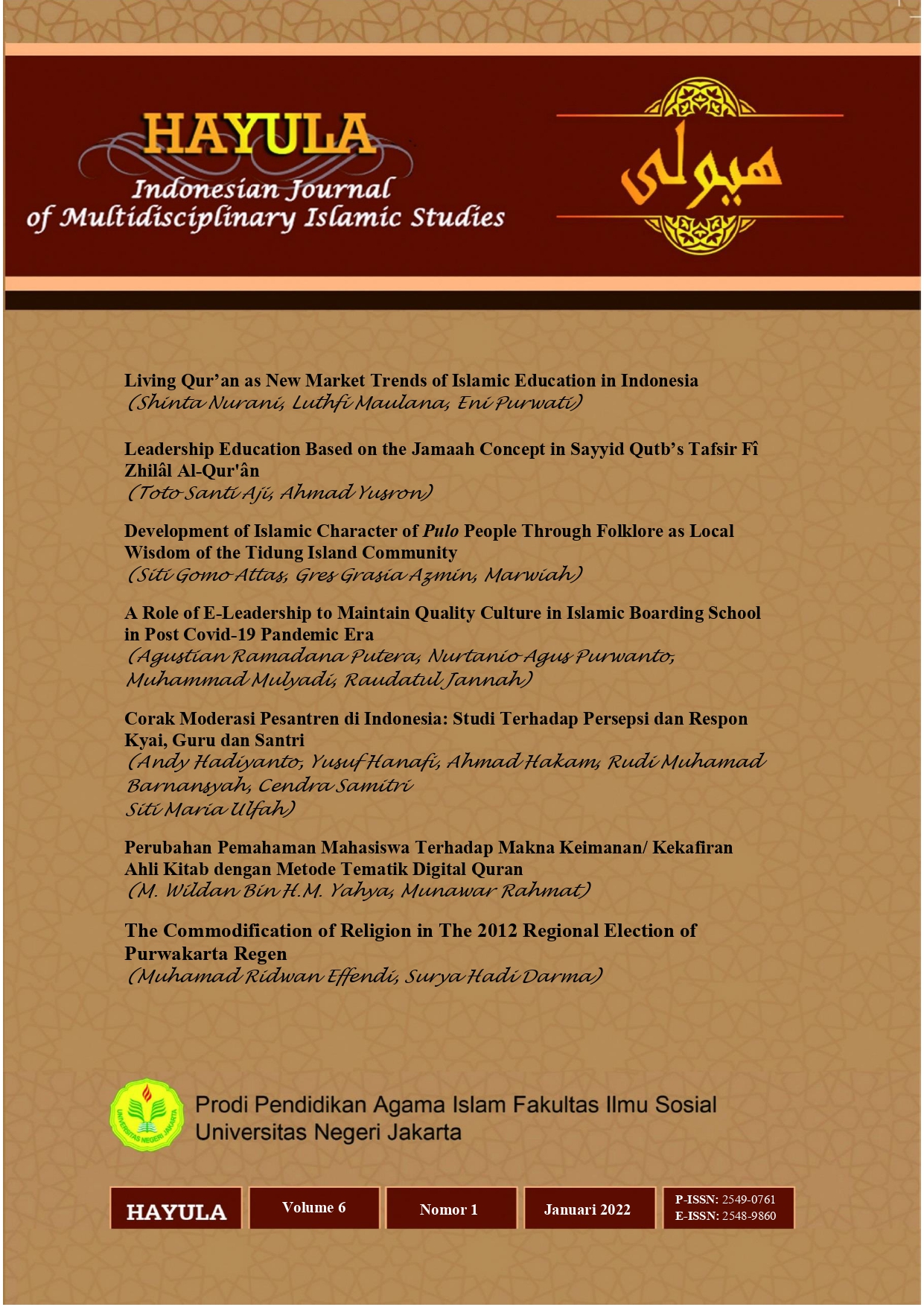
Hayula: Indonesian Journal of Multidisciplinary Islamic Studies
Vol. 6 No. 1 (2022)Geographical Diversity of Authors:
This issue explores a wide range of multidisciplinary topics in contemporary Islamic studies and education, including the phenomenon of the living Qur’an as a new market trend in Indonesian Islamic education, leadership education based on the jamaah concept in Sayyid Qutb’s Tafsīr Fī Zhilāl al-Qur'ān, and the development of Islamic character through local folklore among the Tidung Island community. Furthermore, this edition examines the role of e-leadership in maintaining quality culture within Islamic boarding schools (pesantren) in the post-COVID-19 era, moderation patterns and responses among kyai, teachers, and santri across Indonesian pesantren, the transformation of university students' understanding of Ahl al-Kitāb through digital thematic Qur'anic learning, and the dynamics of religious commodification in the 2012 Purwakarta regional election. The contributing authors represent a diverse group of esteemed scholars affiliated with various higher education institutions across Indonesia. This geographical and institutional representation reflects the richness of scholarly perspectives and highlights the dynamic interaction between Islamic education, Qur’anic studies, religious moderation, local wisdom, digital transformation, and socio-political developments within the Indonesian context.
-
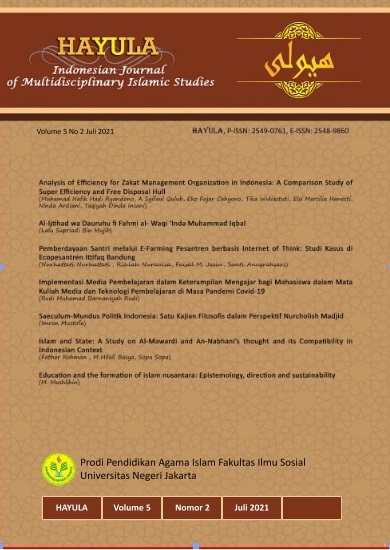
Hayula: Indonesian Journal of Multidisciplinary Islamic Studies
Vol. 5 No. 2 (2021)Geographical Diversity of Authors:

This issue explores a wide range of multidisciplinary topics in Islamic studies, including a comparative efficiency analysis of Zakat Management Organizations in Indonesia using Super Efficiency and Free Disposal Hull models, the concept of ijtihād and its role in contextualizing reality according to Muhammad Iqbal, and the empowerment of santri through IoT-based e-farming at Ecopesantren Al-Ittifaq Bandung. Furthermore, this edition examines the implementation of learning media to enhance student teaching skills during the COVID-19 pandemic, a philosophical study of Indonesian political saeculum-mundus through the lens of Nurcholish Madjid, a comparative analysis of Al-Mawardi's and An-Nabhani's state-Islam concepts and their compatibility in the Indonesian context, and the epistemology, direction, and sustainability of education in shaping Islam Nusantara. The contributing authors represent a diverse group of esteemed scholars affiliated with various higher education and academic institutions across Indonesia, including Universitas Airlangga, Universitas Negeri Jakarta, Universitas Muhammadiyah Jakarta, UIN Mataram, UIN Sunan Ampel Surabaya, and Universitas Muhammadiyah Sidoarjo. This geographical and institutional representation reflects the richness of scholarly perspectives and the profound relevance of the themes discussed across Islamic economics, contemporary thought, educational technology, politics, and social empowerment
-
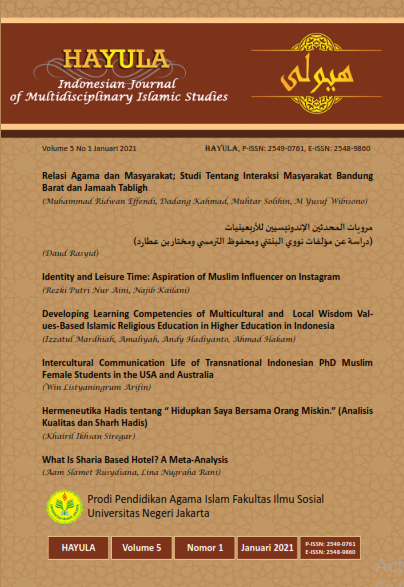
Hayula: Indonesian Journal of Multidisciplinary Islamic Studies
Vol. 5 No. 1 (2021)Geographical Diversity of Authors:

This issue explores a wide range of multidisciplinary topics in Islamic studies, including social interaction dynamics between the Tablighi Jama'at and local communities in West Bandung, narrations of Indonesian Hadith scholars (al-Arbaʻīniyāt) through the works of Nawawi al-Bantani, Mahfuz al-Tarmasi, and Mukhtar ibn 'Atharid, and identity aspirations among Muslim influencers on Instagram. Furthermore, this edition covers the development of learning competencies based on multicultural and local wisdom values in Islamic higher education, the intercultural communication experiences of transnational Indonesian female PhD students in the US and Australia, hadith hermeneutics and critique on living among the poor, and a meta-analysis defining sharia-compliant hotels in the contemporary Islamic hospitality sector. The contributing authors represent a diverse group of esteemed scholars affiliated with various higher education and academic institutions across Indonesia. This geographical and institutional representation reflects the richness of scholarly perspectives and highlights the dynamic interaction between Islamic intellectual history, educational development, hadith studies, media culture, diaspora life, and sharia economics within the Indonesian and global context.
-
Hayula: Indonesian Journal of Multidisciplinary Islamic Studies
Vol. 4 No. 2 (2020)Geographical Diversity of Authors:


This issue explores a wide range of multidisciplinary topics in Islamic studies, including a critical philological collation of al-Būṣīrī’s Qaṣīdah Burdah across manuscripts and living editions, the role of literacy culture in Islamic Religious Education and the broader development of Islam in Indonesia, and health communication framing within Islamic education on new media platforms. Furthermore, this edition examines millennial perceptions of moderate versus radical Islam in Surabaya, the jurisprudence and accounting mechanisms of waqf asset recovery, the verification and geographical mapping of Qibla direction in mosques and prayer rooms, and the narratives and patterns of Islamic student movements at Universitas Negeri Jakarta. In alignment with our regional and international academic outreach, the contributing authors represent a diverse group of esteemed scholars affiliated with institutions across Indonesia and Malaysia, such as Universiti Putra Malaysia, Universitas Negeri Jakarta, Universitas Pendidikan Indonesia, Universitas Islam Bandung, UIN Sunan Ampel Surabaya, and Universitas Nahdlatul Ulama Indonesia. This cross-border representation reflects the richness of scholarly perspectives and underscores the relevance of multidisciplinary inquiries spanning religious literacy, Islamic law, communication, falak science, and socio-religious dynamics in Southeast Asia.
-
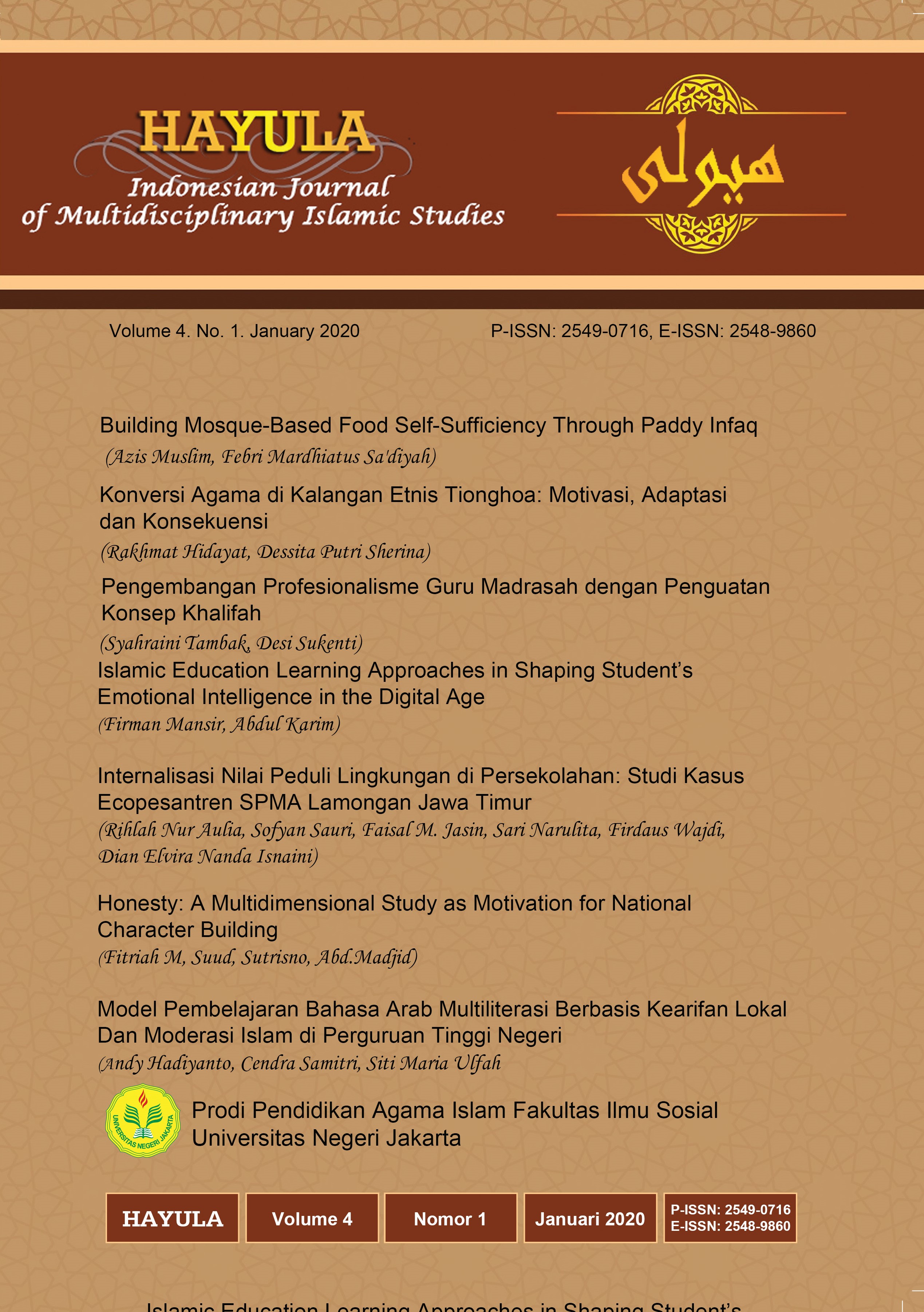
Hayula: Indonesian Journal of Multidisciplinary Islamic Studies
Vol. 4 No. 1 (2020)Geographical Diversity of Authors:

This issue explores a wide range of multidisciplinary topics in Islamic studies and education, including community empowerment through mosque-based food self-sufficiency via paddy infaq, the socio-religious dynamics of conversion among ethnic Chinese communities encompassing motivations, adaptations, and social consequences, the professional development of madrasah teachers grounded in the khalīfah concept, Islamic learning approaches for fostering students' emotional intelligence in the digital age, the internalization of environmental care values at Ecopesantren SPMAA Lamongan, a multidimensional study of honesty as a catalyst for national character building, and the design of a multiliteracy Arabic language learning model integrating local wisdom and religious moderation in public universities; the contributing authors represent a diverse group of esteemed scholars affiliated with academic and higher education institutions across various regions in Indonesia, including Jakarta, Yogyakarta, Riau, and West Java, reflecting the richness of scholarly perspectives and the vital intersection between Islamic thought, educational innovation, social transformation, environmental awareness, and local cultural dynamics.
-
Hayula: Indonesian Journal of Multidisciplinary Islamic Studies
Vol. 3 No. 2 (2019)Geographical Diversity of Authors:


This issue explores a wide range of multidisciplinary topics in Islamic studies, including the prospects and challenges of the halal food industry in the era of the Industrial Revolution 4.0, santri perceptions of Islamic moderation and national insight (wawasan kebangsaan), the new construction and development of religious tourism in DKI Jakarta, Ma‘had 'Aly and the ongoing challenges of modernizing Islamic higher education in Indonesia, the linguistic and methodological impact of balancing precision and approximation in resolving scholarly terminological disputes (ikhtilāf), and Dayah al-Aziziyah’s strategic negotiations with modernity to preserve traditional Islamic identity in Aceh. In alignment with our global academic outreach, the contributing authors represent a diverse group of esteemed scholars affiliated with academic institutions from Indonesia and Algeria. This international representation reflects the richness of scholarly perspectives and underscores the global relevance of multidisciplinary inquiries spanning halal industry trends, religious moderation, educational modernization, Arabic linguistic discourse, and cultural preservation amid contemporary social transformations.
-
Hayula: Indonesian Journal of Multidisciplinary Islamic Studies
Vol. 3 No. 1 (2019)Geographical Diversity of Authors:


This issue explores a wide range of multidisciplinary topics in Islamic studies, including the development of Qur'anic translation capability among prospective Islamic Religious Education teachers through the Tamyiz learning strategy, Nurcholish Madjid’s intellectual trajectory from politics to educational reform in Indonesia, Nahdlatul Ulama's strategies in maintaining authority and legitimacy within the Indonesian Islamic arena, the status and role of women from comparative Islamic and Minangkabau customary (adat) perspectives, a methodological inquiry into the foundational epistemological sources of knowledge (uṣūl al-maṣādir fī al-ma‘rifah), and the implementation of e-learning systems in Islamic Religious Education programs at UIN Raden Fatah Palembang. In alignment with our global academic outreach, the contributing authors represent a diverse group of esteemed scholars affiliated with academic institutions from Indonesia and Saudi Arabia. This international representation reflects the richness of scholarly perspectives and underscores the global relevance of multidisciplinary inquiries encompassing Islamic pedagogy, epistemology, gender discourse, socio-political movements, and digital educational integration in contemporary Muslim societies.
-
Hayula: Indonesian Journal of Multidisciplinary Islamic Studies
Vol. 2 No. 2 (2018)Geographical Diversity of Authors:


This issue explores a wide range of multidisciplinary topics in Islamic studies, including the ambivalence of da'wah and political ambition within the Gerakan Mahasiswa Pembebasan, pedagogical and systemic innovations in Islamic education, spiritual values and religious harmony embedded in the daily litany of Kitāb al-Awrād al-Nūr'āniyyah, an Islamic perspective on the Fetish-Badri healing practices for spiritual possession in Borno State (Nigeria), the principles of legal preference (al-tarjīḥ) between mafhūm al-muwāfaqah and mafhūm al-mukhālafah in Islamic legal deduction, and the symbolic hermeneutics of eschatological verses regarding the apocalypse and resurrection in the Qur'an. In alignment with our global academic outreach, the contributing authors represent a diverse group of esteemed scholars affiliated with academic institutions from Indonesia, Malaysia, India, Nigeria, and Saudi Arabia. This international representation reflects the richness of scholarly perspectives and underscores the global relevance of multidisciplinary inquiries spanning political da'wah, educational innovation, legal theory (uṣūl al-fiqh), socio-anthropological healing rituals, and Qur'anic interpretation.
-

Hayula: Indonesian Journal of Multidisciplinary Islamic Studies
Vol. 2 No. 1 (2018)Geographical Diversity of Authors:


This issue explores a wide range of multidisciplinary topics in Islamic studies, including the intersection of Islam and nationalism through the educational reform views of Ahmad Dahlan and Abdul Wahab Chasbullah, comparative jurisprudence across the four madhhabs regarding the determination of the lunar month (falak), a descriptive-analytical study on the grammatical and linguistic impacts of variant Qur'anic readings (qirā'āt), the ongoing sociological discourse between Muhammadiyah and Nahdlatul Ulama re-examined through Clifford Geertz’s The Religion of Java, an empirical study across 13 countries analyzing the impact of Islamic banking financing on economic growth, and the revitalization and spiritual interpretation of meaning behind the Islamic dance composition Shirath Nan Tersirat. In alignment with our global academic outreach, the contributing authors represent a diverse group of esteemed scholars affiliated with academic institutions from Indonesia and Sudan, including Universitas Negeri Jakarta, Universitas 'Aisyiyah Yogyakarta, UIN Walisongo Semarang, Universitas Islam Indonesia, and Jāmi'ah al-Imām al-Mahdī. This international representation reflects the richness of scholarly perspectives and underscores the global relevance of multidisciplinary inquiries encompassing Islamic intellectual history, astronomical jurisprudence, Arabic linguistics, religious sociology, macro-Islamic finance, and sacred performing arts.
-
Hayula: Indonesian Journal of Multidisciplinary Islamic Studies
Vol. 1 No. 2 (2017)Geographical Diversity of Authors:


This issue explores a wide range of multidisciplinary topics in Islamic studies, including translational equivalence of polysemy in the Ministry of Religious Affairs' translation of Surah al-Baqarah, father-child interaction patterns grounded in the Qur'anic concept of ibn and its implications for Islamic Religious Education, a comparative jurisprudence study on the legal provisions of warranty commitments in gifts (aḥkām iltizām al-ḍamān fī al-hibah), the pedagogical impact of Islamic economics coursework on university students' saving behavior in Islamic banks, the pluralistic dynamics of inheritance laws in Indonesia, and pesantren-based environmental management practices at Pondok Pesantren Nurul Hakim Lombok. In alignment with our global academic outreach, the contributing authors represent a diverse group of esteemed scholars affiliated with academic institutions from Indonesia and Saudi Arabia, including Universitas Negeri Jakarta, Universitas Pendidikan Indonesia, UIN Syarif Hidayatullah Jakarta, STAINU Jakarta, STIE Ahmad Dahlan Jakarta, and the University of Jeddah. This international representation reflects the richness of scholarly perspectives and underscores the global relevance of multidisciplinary inquiries spanning Qur'anic hermeneutics, Islamic pedagogy, comparative jurisprudence (fiqh muqāran), financial literacy, legal pluralism, and ecological sustainability within Muslim communities.
-
Hayula: Indonesian Journal of Multidisciplinary Islamic Studies
Vol. 1 No. 1 (2017)Geographical Diversity of Authors:


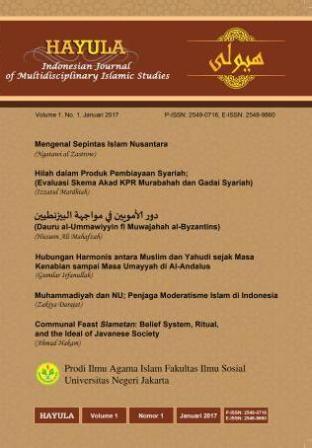
This issue explores a wide range of multidisciplinary topics in Islamic studies, including the conceptual foundations and socio-cultural characteristics of Islam Nusantara, the critical evaluation of legal stratagems (ḥīlah) within Islamic financing products such as murābaḥah housing loans and sharia pawnbroking, the strategic military role of the Umayyads in encountering the Byzantine Empire, historical narratives of harmonious Muslim–Jewish relations spanning from the Prophetic era to Umayyad al-Andalus, the institutional roles of Muhammadiyah and Nahdlatul Ulama as guardians of Islamic moderatism in Indonesia, and the slametan communal feast as a manifestation of the belief system, ritual practices, and social ideals of Javanese Muslim society. In alignment with our global academic outreach, the contributing authors in this inaugural issue represent a diverse group of esteemed scholars affiliated with academic institutions from Indonesia and Jordan. This international representation reflects the richness of scholarly perspectives and demonstrates an early commitment to fostering dialogue between Southeast Asian and Middle Eastern scholarship across Islamic history, sharia economics, religious moderation, interfaith relations, and cultural anthropology.


